
Urbandale Chiropractor: Lasting Relief for Migraines and Headaches

Natural Treatment for Migraines and Headaches That Targets the Root Cause of Your Pain
What Causes Migraines?
From a medical standpoint, migraines are a complex neurological condition, but from a chiropractic perspective, we look deeper at the structural root causes. While genetics and environmental triggers play a role, we often find that the "fuse" is lit by nervous system interference.
When the vertebrae in your upper neck (specifically the top two bones, Atlas and Axis) lose their proper motion or alignment, they create tension on the brainstem and surrounding nerves. This structural stress combined with triggers like stress, hormonal changes, or diet—can overwhelm the nervous system, resulting in the "electrical storm" of a migraine.
What are the 5 C's for migraines?
Dietary triggers are unique to every patient, but we often use the "5 C's" mnemonic to help patients identify common culprits that may be inflammatory or chemically triggering:
Chocolate: Contains phenylethylamine, which can affect blood vessel expansion.
Cheese: Specifically aged cheeses (like cheddar, blue, or Swiss) which contain tyramine.
Caffeine: A double-edged sword; withdrawal can cause headaches, but excessive intake triggers them.
Citrus: Fruits like lemons, grapefruits, and oranges can be triggers for some due to octopamine.
Cola: Often contains artificial sweeteners (aspartame) and caffeine, a potent combination for triggering attacks.
Can migraine cause vomiting?
Yes, and it is a very common, albeit distressing, symptom.
Migraines are not "just bad headaches"; they are a systemic neurological event. When the migraine activity affects the vagus nerve and the autonomic nervous system (which controls digestion), it can lead to gastric stasis (where digestion stops) followed by severe nausea and vomiting. If you experience this, it is a sign that your migraine is affecting your central nervous system deeply.
Can neck problems give you migraines?
Absolutely. In fact, this is one of the most common causes we see at Levels Chiropractic. The nerves that travel from your upper neck into your head (specifically the trigeminocervical nucleus) are directly responsible for transmitting pain signals to the brain.
If you have lost the natural curve of your neck (often due to "tech neck" or past trauma like whiplash), the constant mechanical stress on these nerves can refer pain directly into the head, eyes, and face. This is often medically termed a cervicogenic headache, but it frequently mimics or triggers full-blown migraine episodes.
Can misalignment cause migraines?
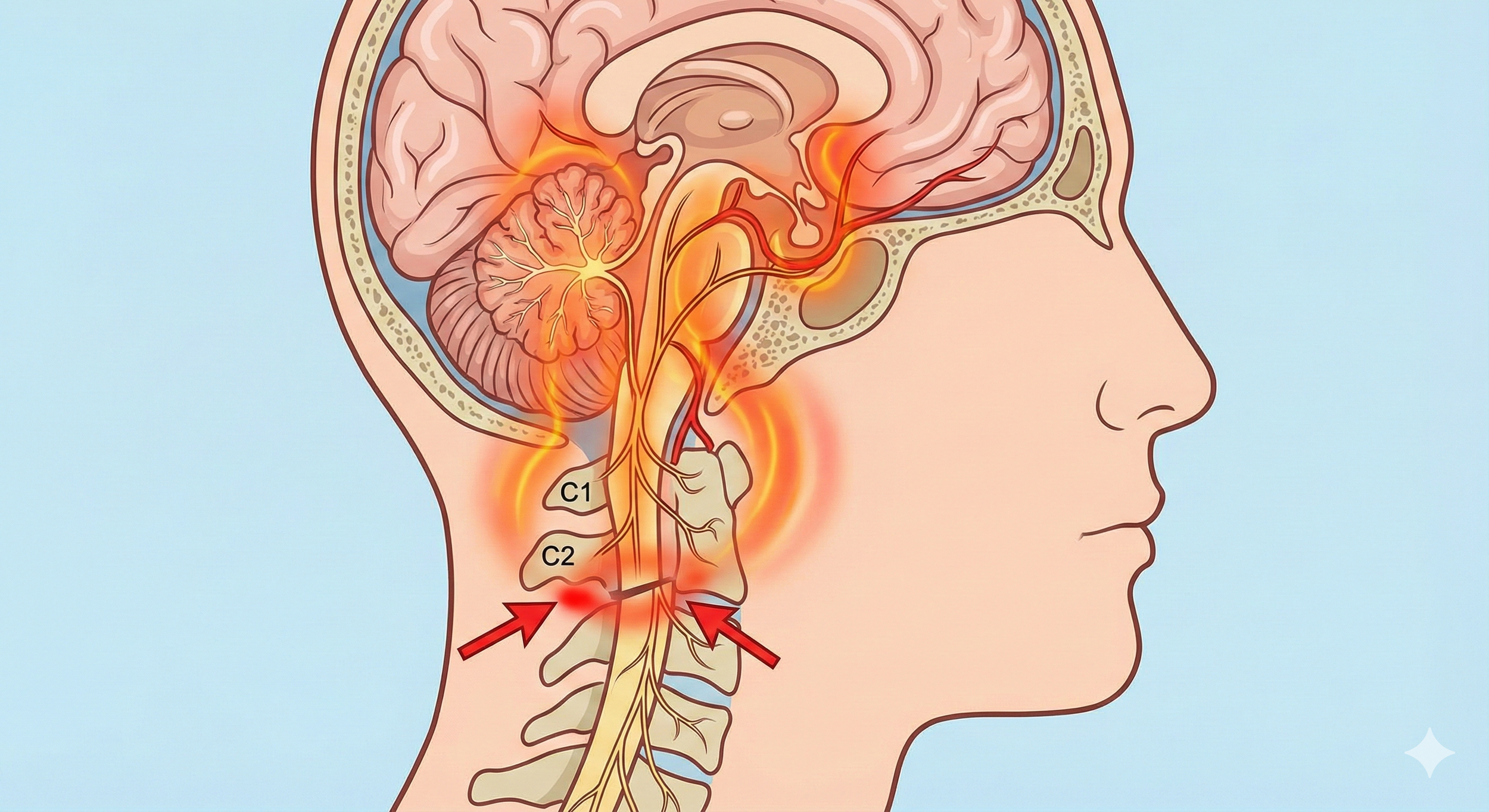
Yes. We refer to this as a subluxation. When a vertebra in the spine, particularly the upper cervical spine that shifts out of proper alignment, it puts pressure on the delicate nerves and blood vessels leading to the cranium.
This misalignment does two things:
Nerve Irritation: It hypersensitizes the nerves, making them more likely to fire pain signals.
Blood Flow Changes: It can alter proper blood flow to the brain (vascular constriction or dilation), which is a key mechanism of migraine pain.
What is often mistaken for migraines?
Patients often endure pain for years because they are misdiagnosed.
Two common conditions mistaken for migraines are:
Cervicogenic Headaches: Pain that starts in the neck and shoots up the back of the skull to the eye. Because it is one-sided, it is easily confused with migraines.
Sinus Headaches: Pressure in the forehead and face. However, real sinus headaches usually come with fever or thick discharge. If you have "sinus pressure" but clear nasal passages, it may actually be a migraine or referred pain from the neck.
Stop Managing Pain, Start Correcting It. The leading Urbandale chiropractor for natural migraines and headache treatment.
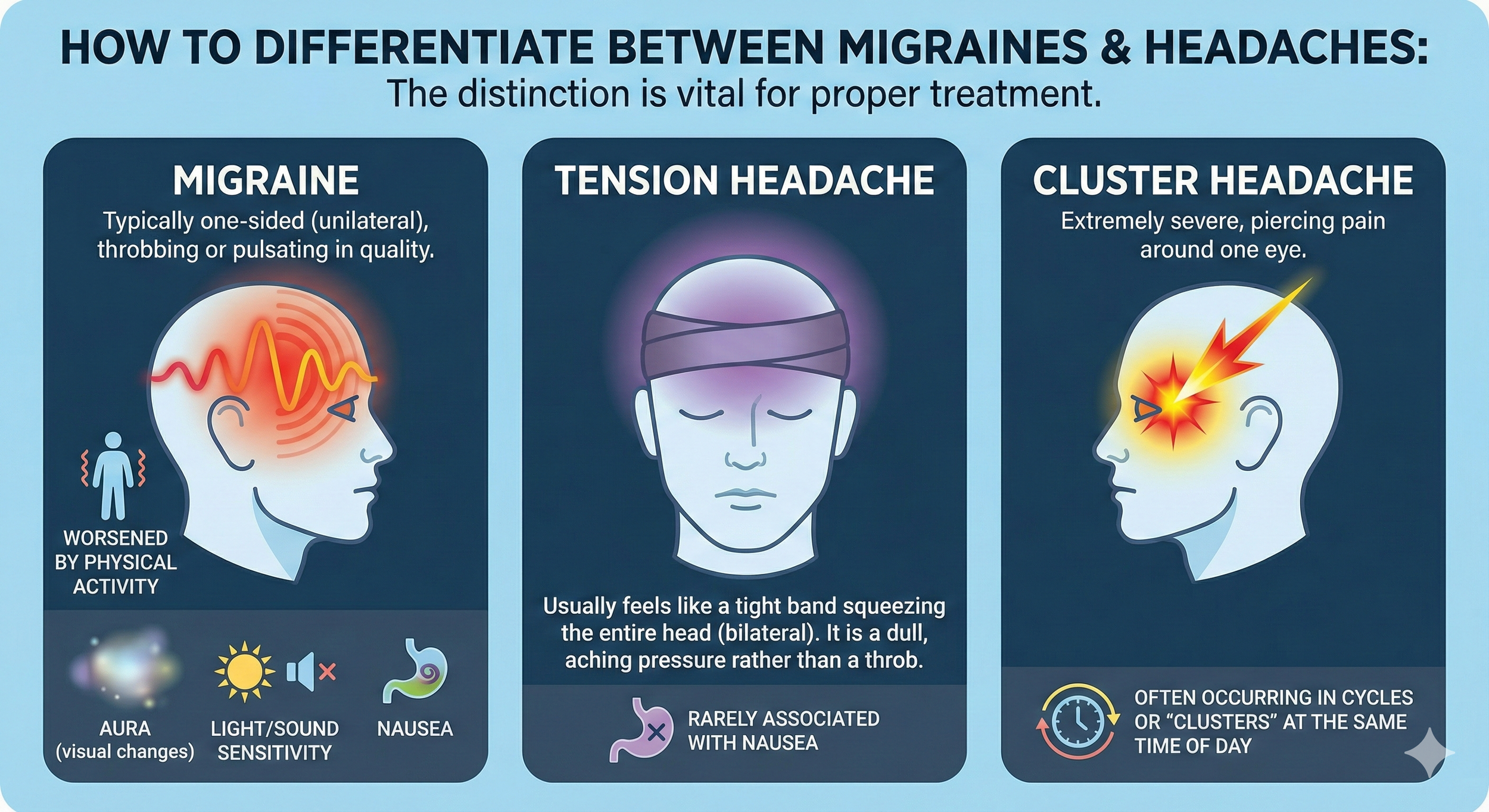
How do you differentiate between Migraines and headaches?
The distinction is vital for proper treatment.
Migraine: Typically, one-sided (unilateral), throbbing or pulsating in quality, and worsened by physical activity. It is often accompanied by "aura" (visual changes), light/sound sensitivity, and nausea.
Tension Headache: Usually feels like a tight band squeezing the entire head (bilateral). It is dull, aching pressure rather than a throb, and is rarely associated with nausea.
Cluster Headache: Extremely severe, piercing pain around one eye, often occurring in cycles or "clusters" at the same time of day.
What is the best home treatment for migraines and headaches?
While we aim to correct the cause, we know you need relief now when an attack hits.
Temperature Therapy: Ice is usually best for migraines (constricts throbbing blood vessels) applied to the base of the skull. Heat is often better for tension headaches (relaxes tight muscles).
Hydration with Electrolytes: Dehydration shrinks the brain slightly, pulling on the meninges (pain-sensitive coverings).
Magnesium: Many migraine sufferers are deficient in Magnesium. Taking a high-quality Magnesium supplement can help relax the nervous system and muscles.
Rest in Darkness: Sensory deprivation helps calm the over-excited brain.
While no doctor can "cure" a condition in the sense that it can never return, chiropractic care is one of the most effective, drug-free ways to manage and resolve chronic migraines.
We don't just treat the pain (the symptom); we treat the structural dysfunction (the cause). By restoring proper biomechanics to the neck and spine, we remove the constant irritation to the nervous system. Many of our patients at Levels Family Chiropractic go from experiencing weekly debilitating attacks to having them rarely, if ever.
Can a chiropractor fix a migraine headache?
How does a chiropractor help with migraines?
At Levels Family Chiropractic, our approach is specific and gentle.
Specific Adjustments: We perform precise adjustments to the cervical spine to correct misalignments (subluxations). This takes pressure off the nerves and restores normal blood flow.
Posture Correction: We work to restore the natural curve of your neck, reducing the daily strain on your spinal cord.
Soft Tissue Therapy: We address the trigger points in the trapezius and suboccipital muscles that often pull on the skull and trigger headaches.
The result? A nervous system that is calm, balanced, and able to adapt to stress without triggering a pain response.
Ready to Break Free from Pain?
Don’t let migraines steal another day. Experience the specific headache treatment you need to get your life back.