
Neck Pain Treatment in Urbandale

If you’re a resident of Urbandale dealing with persistent neck discomfort, you aren’t alone. The human head weighs approximately 10 to 12 pounds, about the size of a bowling ball. When your posture shifts forward by just an inch, the effective weight on your lower neck and upper back doubles. Over time, this structural stress leads to chronic pain, tension headaches, and decreased quality of life.
At Levels Family Chiropractic, we don’t just "crack" necks; we analyze the delicate relationship between your cervical spine and your nervous system. As a leading Chiropractor in Urbandale, we’ve compiled this exhaustive guide to help you understand your symptoms and find a path toward lasting relief.
How do I tell if my neck is out of alignment?
In the chiropractic world, we refer to a misalignment as a vertebral subluxation. This occurs when a spinal bone loses its proper position, interfering with the transmission of nerve impulses.
You might be out of alignment if you notice:
The "Kink": A specific spot in your neck feels "stuck" when you try to look over your shoulder while driving.
Visual Imbalance: If you stand in front of a mirror, does one ear sit higher than the other? Does your head tilt slightly to one side even when you think you’re centered?
Uneven Wear on Shoes: Believe it or not, a neck misalignment can cause a compensatory "pelvic tilt," leading to uneven walking patterns.
Constant Fatigue: When your spine is out of alignment, your muscles work 24/7 to hold your head up, leading to exhaustion.
How do I know if my neck pain is muscular or spinal?
Understanding the source of your pain is the first step in effective treatment.
Muscular Pain: This is typically a dull, aching sensation. It feels like "soreness" and is often tender to the touch. If you can rub the spot and feel a "knot" that is temporarily released, the issue is primarily muscular.
Spinal (Joint/Nerve) Pain: This is often sharp, localized, or "stabbing." If the pain feels like it is deep inside the bone, or if it radiates into your shoulder blades or down your arms (pins and needles), the issue is likely spinal or disc-related.
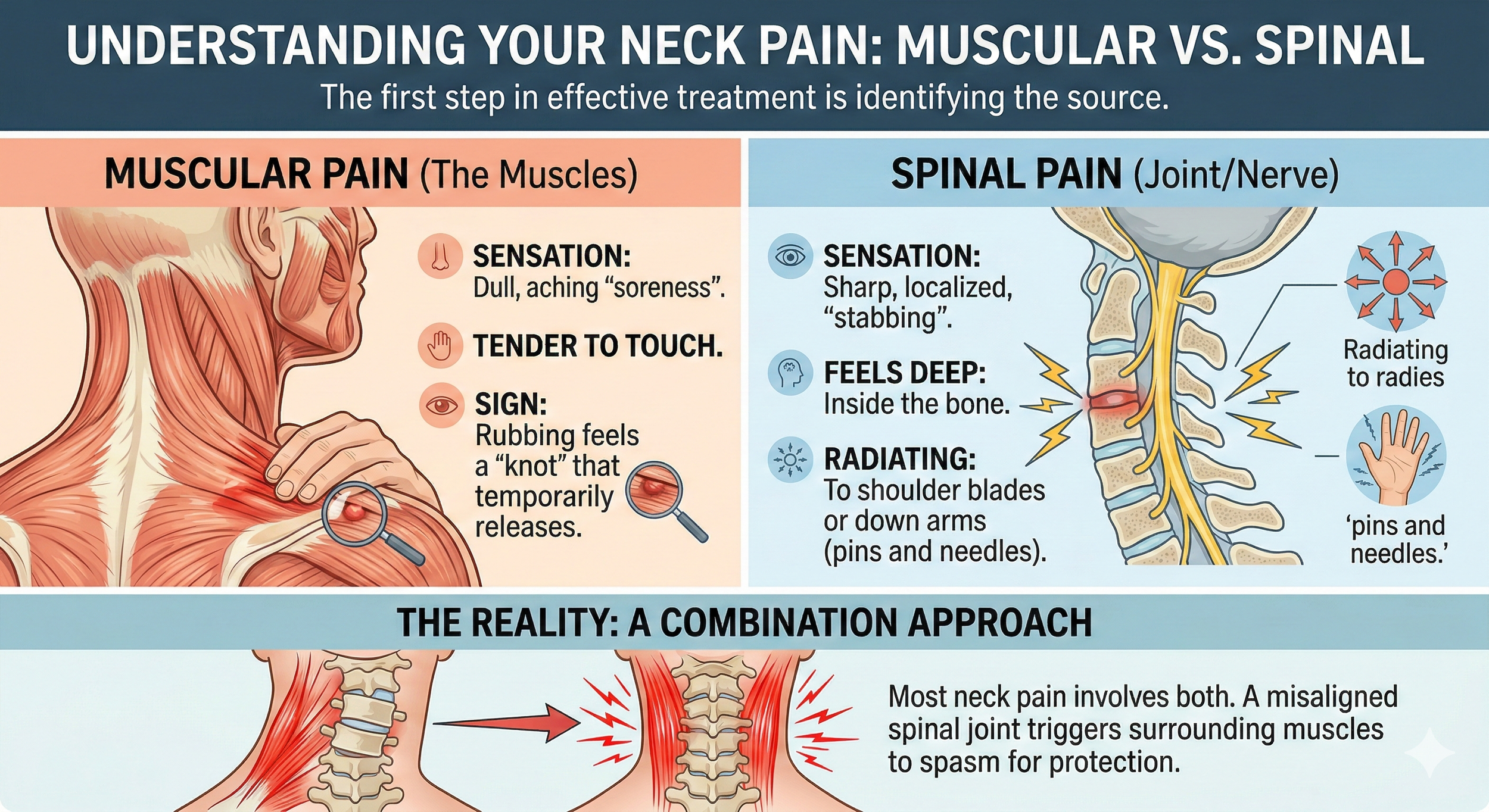
The Reality: Most neck pain is a combination of both. A misaligned joint (spinal) causes the surrounding muscles to spasm (muscular) to prevent further injury.
Problems can neck issues cause:
The neck is the gateway between your brain and the rest of your body. When this gateway is constricted, it can lead to a domino effect of health issues:
Cervicogenic Headaches: Migraines and tension headaches often originate from the top three vertebrae.
Vertigo/Balance Issues: Misalignments can confuse the proprioceptors that tell your brain where your head is in space.
TMJ and Jaw Pain: The nerves controlling the jaw muscles originate in the upper neck.
Digestive Issues: The Vagus nerve passes right by the C1 vertebra; interference here can actually impact your gut health.
Lower Back Pain: Because the spine functions as a single unit, a "kink" at the top often forces the lower back to twist to compensate.
How to self-realign your neck?
Warning: Do not attempt to "pop" your own neck.
While it might provide a fleeting sense of relief due to the release of endorphins, self-manipulation is dangerous for two reasons:
Hyper-mobility: You are likely "popping" the joints that are already moving too much, rather than the one that is actually stuck.
Ligament Laxity: Repeatedly cracking your own neck can overstretch your ligaments, leading to permanent instability.
Safe Alternatives:
Pec Stretches: Open your chest to reduce the "slump" that pulls your neck out of alignment.
Cervical Traction: Using a specific neck orthotic (prescribed by your Chiropractor) to restore the natural curve.
Serious Neck Conditions
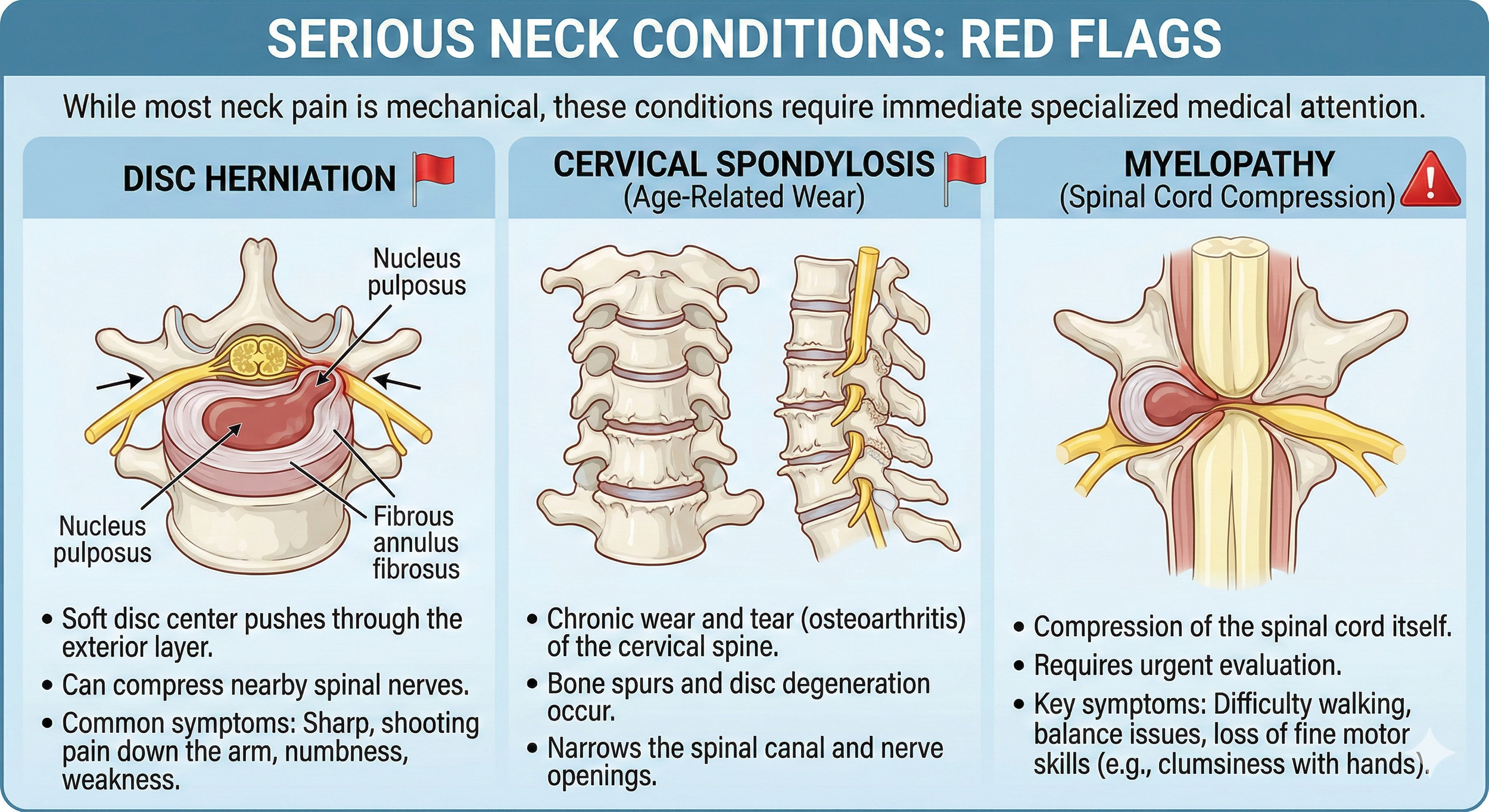
While most neck pain is mechanical, we stay vigilant for "Red Flag" conditions that require immediate or specialized medical intervention:
Disc Herniation: When the soft center of a spinal disc pushes through a tear in the exterior, potentially compressing a nerve. While many neck issues stem from daily habits, acute trauma such as a car accident requires specialized care to address whiplash symptoms before they lead to long-term spinal instability
Cervical Spondylosis: Age-related wear and tear (osteoarthritis) that can narrow the space needed for the spinal cord.
Myelopathy: Compression of the spinal cord itself, which may cause difficulty walking or loss of fine motor skills in the hands.
How to treat a child's stiff neck?
Children in Urbandale are spending more time on screens than ever, leading to "Early-Onset Tech Neck."
Heat vs. Cold: For a child, a warm compress is usually more comforting for a stiff neck.
Gentle Movement: Encourage "figure-8" movements with their nose to keep the joints lubricated.
Pediatric Chiropractic: Children’s spines are highly plastic. A pediatric adjustment is incredibly gentle—often using no more pressure than you would use to check the ripeness of a peach.
Beyond treating stiffness from screens, gentle adjustments can also be life-changing for infants, providing natural colic relief by removing interference in the nervous system that affects digestion.
How effective is chiropractic treatment for neck pain?
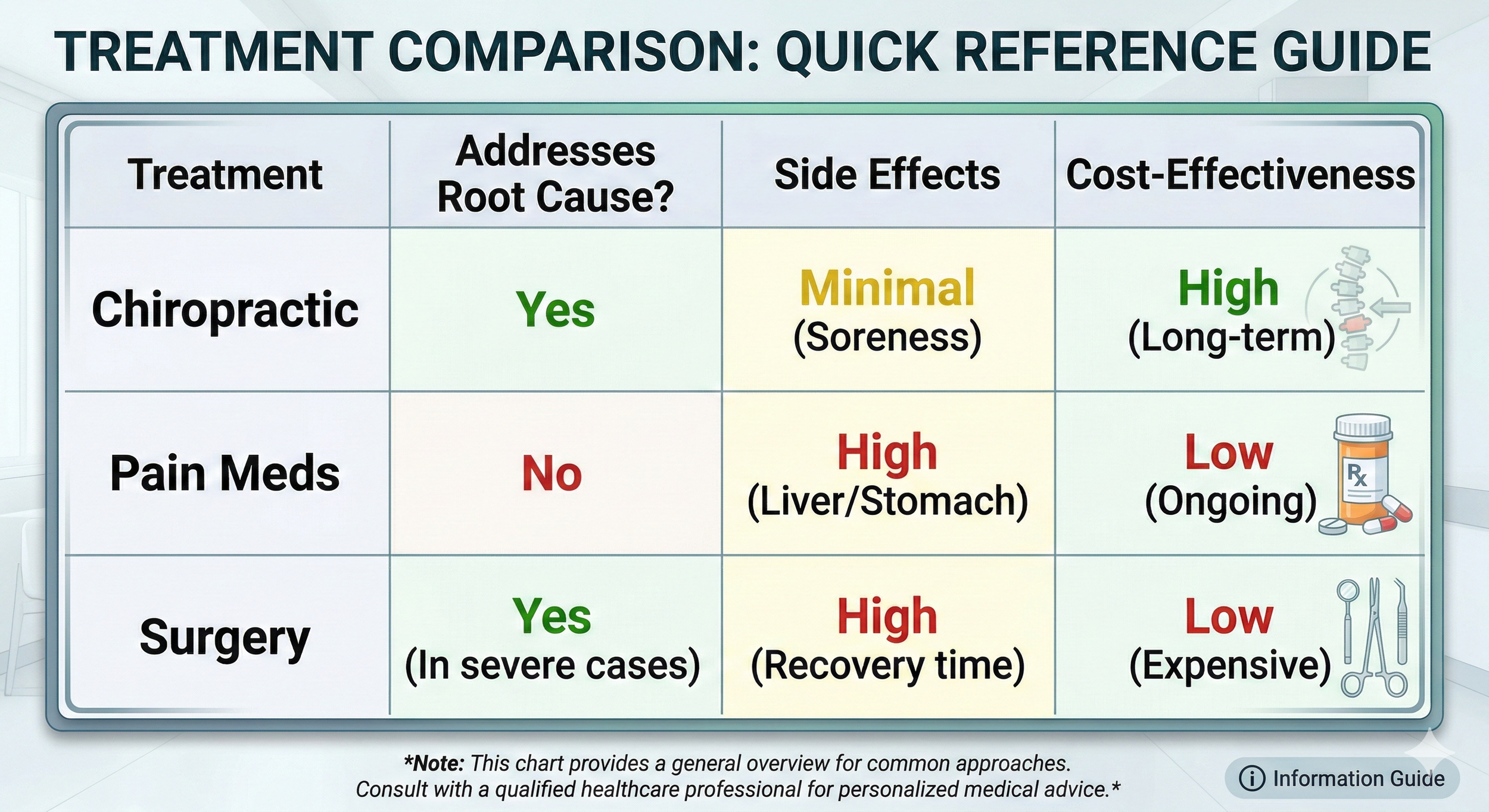
The data is clear: Chiropractic care is highly effective. Multiple studies have shown that patients with neck pain who receive spinal manipulation show significantly greater improvement than those taking muscle relaxants or pain medication.
By focusing on the structure of the spine, we address the cause of the inflammation rather than just chemical suppression of the symptoms. This leads to higher patient satisfaction and lower rates of recurrence.
Beyond our clinical experience in Urbandale, major health institutions have recognized that spinal manipulation is a highly effective, non-invasive approach for managing musculoskeletal issues.
How long does it take for a chiropractor to fix neck pain?
Recovery is a journey, not an event. At Levels Chiropractic, we generally see progress in three phases:
Initial Relief (1-2 weeks): Reducing acute inflammation and pain.
Stabilization (4-6 weeks): Strengthening the soft tissues to ensure the vertebrae "hold" their new, correct positions.
Maintenance (Monthly): Periodic "tune-ups" to prevent the stressors of daily life (sitting, stress, sports) from causing a relapse.
What to expect after a neck adjustment?
Most patients feel an immediate sense of "lightness" or increased clarity. However, because we are moving structures that may have been stuck for years, you might experience:
Mild Soreness: Similar to the feeling after your first day back at the gym.
Increased Range of Motion: You’ll find you can turn your head further than you have in months.
Improved Sleep: As the nervous system shifts from "Fight or Flight" to "Rest and Digest," sleep quality often skyrockets.
Why do chiropractic adjustments feel so good?
The "cracking" sound is simply the release of oxygen, nitrogen, and carbon dioxide from the joint (cavitation). The reason it feels wonderful is physiological:
Dopamine/Endorphin Rush: The brain rewards the body for restoring motion to a restricted area.
Muscle Relaxation: The adjustment "resets" the muscle spindles, causing tight muscles to instantly relax.
Your neck is your body’s most vital bridge. Don't let stiffness and pain limit your ability to work, play, and live. At Levels Family Chiropractic, we are committed to providing the highest quality care for our community.