
Near Infrared light therapy uses specific wavelengths of light to stimulate cellular energy production, helping reduce inflammation, relieve pain, and support the body's natural healing process. This article explains how near infrared light therapy works, the conditions it may help treat, what to expect during treatment, and why professionally administered therapy combined with chiropractic care can provide more targeted results than consumer-grade devices.
Near Infrared Light Therapy in Urbandale
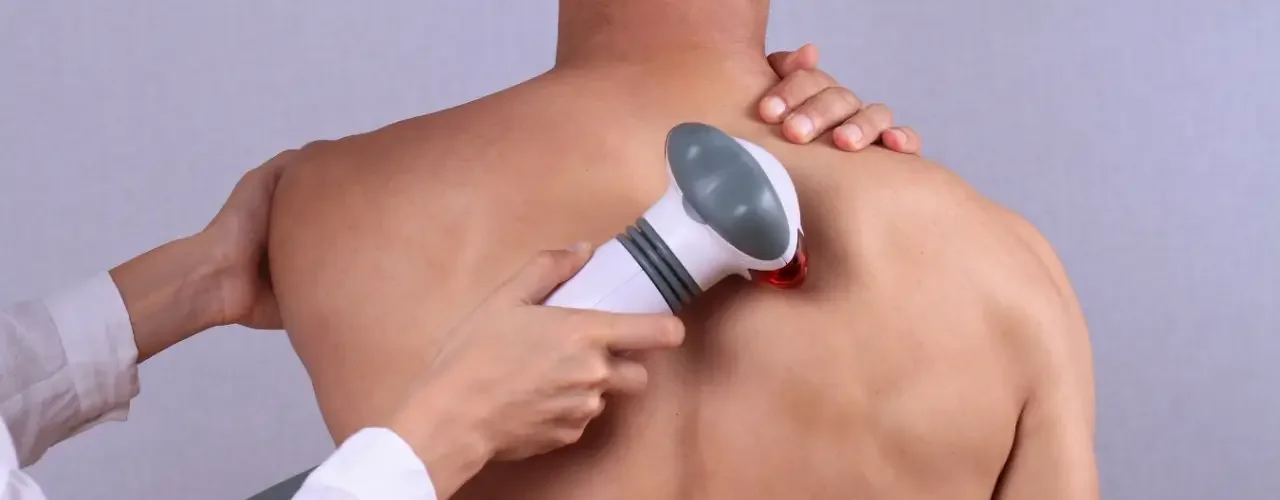
What does Near Infrared Light Therapy Actually Do for the Body?
Often, patients come in thinking that all I do is shine a light on them. And that’s a fair assumption. But when people start to understand how near-infrared light therapy works, it changes the way they look at things entirely.
We use near-infrared wavelengths that go deep into the tissue. The cells are stimulated by the infrared light. According to NIH-funded studies, photobiomodulation, the clinical term, stimulates mitochondria (the powerhouse inside cells) to produce more ATP, the cellular fuel for energy. With more energy, cells can function more effectively, heal and repair faster, and experience reduced inflammation. See NIH Research Paper
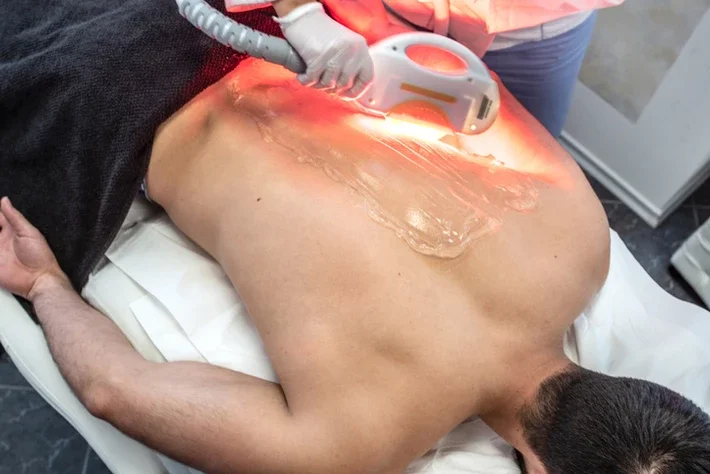
The use of near-infrared light therapy in combination with chiropractic treatment is actually very common. In cases where an individual is seeking relief from lower back or sciatica pain, the light is often applied to assist in the reduction of inflammation in the regions of the spine where the chiropractic adjustment is performed. The chiropractic adjustment becomes more effective when the tissues are less inflamed and reactive.
Athletic injuries represent another common use of near infrared light therapy, particularly for the many active individuals that our clinic serves both in Meredith and in Urbandale. People like these push themselves hard and then wonder why they are not recovering like they used to. Near-infrared light therapy provides assistance in cellular-level tissue healing, based on studies reported in the journal Photomedicine and Laser Surgery. This isn’t a, it’s biology.
Postural issues are also something we frequently see helped with near-infrared light therapy. These are people who sit all day, look at screens all day, and carry all the stress of that in their upper back and neck. Near infrared light helps muscles relax, which makes the therapy session more effective overall.
I am always telling people that near infrared light therapy is not the answer to everything, or a substitute for fixing the underlying causes of an issue; it is, however, an incredibly helpful tool to have along for the ride. When the body has hit a plateau and isn’t moving forward in its natural healing process, this is often the key to getting it over the hump.
Worried it won’t work for your unique case? Good question, and we’d love to run it by you before you do anything.
What Conditions Benefit From Near Infrared Light Therapy?
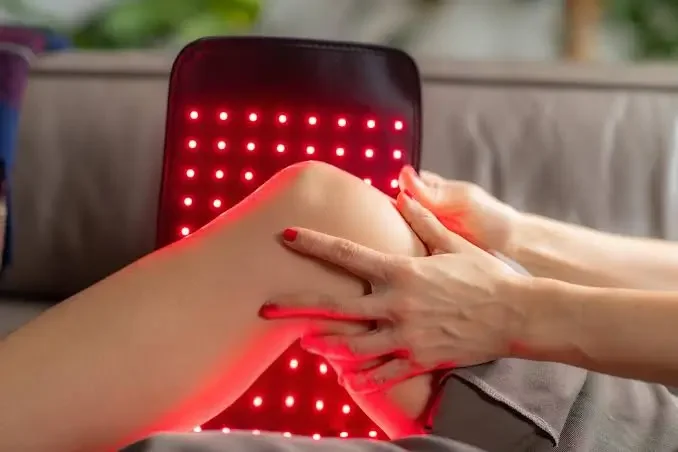
People come into the clinic in Urbandale, and I am often surprised at what conditions near-infrared light therapy seems to benefit.
The infrared wavelengths penetrate deeply into the body, so it is effective for many different conditions beyond just surface-level pain and inflammation. We observe its effectiveness on conditions that have been plaguing individuals for months or even years.
Specifically, we see excellent outcomes in the following areas:
Stubborn neck tightness that doesn’t fully resolve after a chiropractic adjustment
Lower back issues, particularly those triggered by extended periods of sitting at a desk
Inflammation associated with athletic injuries or chronic overuse
Headaches resulting from excessive tension in the neck or upper back
Injuries involving soft tissues and connective tissues that seem to heal slowly
In our Urbandale practice, we typically see patients notice these results when using near-infrared light therapy:
Less inflammation in muscles, joints, and soft tissues
Muscle and ligament recovery
Increased blood circulation and healing in areas of injury
Calmed nervous system responses (and that’s tied with our stress response)
We see the latter of this a lot; patients are under more stress than ever before. Stress is one of the most significant drivers of pain and other health issues. While near-infrared light therapy cannot solve or fix your life stressors, it can help your nervous system calm back down and recover from stress.
A common comment I make near the Meredith neighborhood: near-infrared light therapy isn’t a passive process. Your body does the heavy lifting, and near infrared light therapy helps your cells function more effectively. We compare it to charging a phone battery when it's low on power.
This is a great reason to pair near-infrared light therapy with chiropractic adjustments. A healthy spine and healthy cells go hand in hand.
How Does NIR Light Therapy Work at a Chiropractic Office?
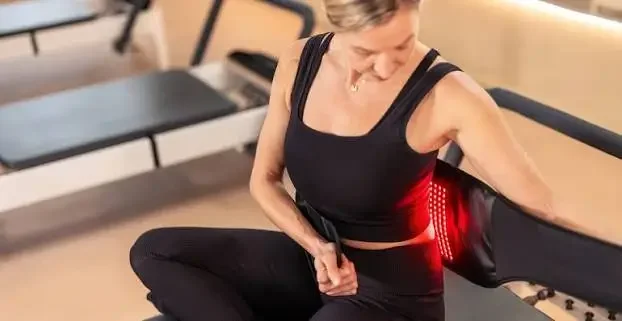
All done. No needles. No loud buzzing. No downtime afterward.
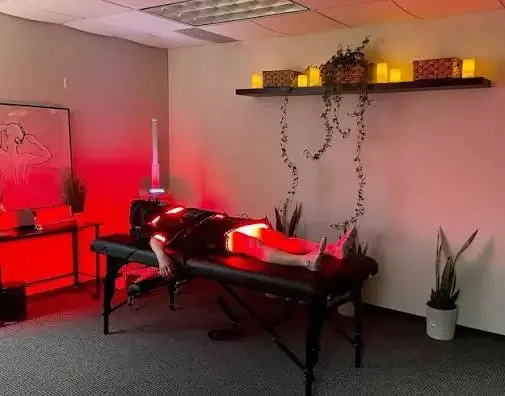
This is a question we ask every week when someone comes in expecting a procedure to be uncomfortable, and they come away surprised by how easy it is. Your job is only to sit there and let it work. The light is the active participant, doing its cellular-level healing work.
Near infrared light therapy is a little more effective when it's combined with other aspects of your treatment plan. In our office, we frequently pair it with a chiropractic adjustment or sports injury treatment. The reduction in inflammation and relaxing of the tissues by the light therapy makes the subsequent adjustment more durable. Though for everyone the light will not be the answer, for many patients in the Merle Hay and Urbandale, the light therapy is often a piece of why they do so well.
The session is quiet, and some patients prefer to just lay there and zone out. And that's perfectly fine.
When the session is over, we'll discuss the findings and your next steps. Leave with a game plan, not questions.
That conversation helps determine the right course of action moving forward. We don’t just point a laser light at a spot on you and say, “that’s it, go home.”
After identifying a target treatment area, the process looks like this:
Position your body in a way that’s most comfortable for the area we’re treating (sitting, reclining, or laying down).
Position the near infrared light device on the skin, but not on top of it.
Apply the light therapy for anywhere from 10-20 minutes, per treatment area.
You’ll experience a mild to moderate heat as the light is applied. Some describe it as a heating pad that's more subtle and penetrates further.
We'll make sure you're comfortable throughout the session.
It’s very common for people to come to our clinic and ask us what they should be prepared to expect. This is especially true for anyone in Urbandale, because most of them are experiencing near infrared light therapy for the first time. To help set your mind at ease, let me take you inside our clinic and walk you through what happens once you sit down.
As I mentioned previously, we take the time to speak with you about where you’re experiencing pain, why you’re there, how long you’ve had the symptoms, and what you’ve tried in the past.
How Many Treatments and What is the Timeline?
The above timeline is only a recommendation. We have athletes in our office working through an injury and we have Moms in the Settlers Glen community coming in to work on stress and sleep support and we use our treatment based on what we're dealing with! But that is only the beginning. Near infrared light therapy is not a one-and-done therapy and it doesn't necessarily work on it's own. It compounds and builds with each treatment session.
So, while not a panacea, we do recommend you keep going to get the results you're looking for. Near infrared light therapy is more like training. The more you go, the better it is for you and your goals. We also like to use it with a lot of the patients that we treat for chiropractic purposes. That is because our nervous system does better when we do treatment to two parts of the body instead of one. Don't know what that timeline looks like for you? Just call and we can talk about it.
Oh, that's a question I get asked most often. I completely understand. You want to know what you're walking into before you decide to sign up. That's completely fine, so here's the short answer based on the patients we see here in Urbandale who come in for near infrared light therapy.
Many patients notice a change after the first few visits, often two or three. A change of course is usually not dramatic but noticeable. Tension that has been sitting in your shoulder blades for months starts to dissipate. Your sleep feels a bit deeper. The ache in your lower back you have been living with for years starts to improve. We see this week after week, even with patients who are unsure if they want to give the therapy a try.
This is how the sessions usually proceed:
Treatments 1-3: We are introducing your body to the benefits of near infrared light therapy. Patients often report feeling more relaxed after treatment, some report a reduction in pain after 24 hours.
Treatments 4-8: The positive effects of the light therapy really start accumulating during this period. Inflammation begins to decrease. Circulation improves. The results from one treatment start to linger longer.
Treatments 9-12: Most patients report feeling a significant improvement at this stage in mobility and comfort.
Maintenance treatments: Some patients require a treatment weekly, while others only need it once or twice per month. This is determined by the condition you are treating and how fast your body responds.
Why Does Clinical NIR Therapy In Urbandale Differ From Other Options?
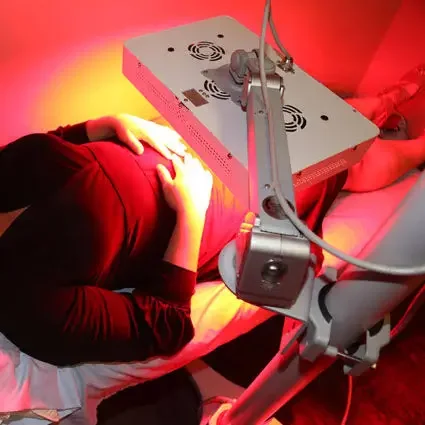
Are we using soft tissue work? Near infrared light therapy is a therapy we have a deep understanding of because that is what we use every day and that is something well, so when we put that in the context of what you actually need and how we are going to use our tools to help you, it changes everything and makes it different than a product you order online. The person in Meredith with chronic neck pain is not the same person who came in to have their high school sports injury addressed, and I wouldn't use that therapy the same way for each of them. That's what it's like to do this every day. You learn what works for whom, when light therapy is part of it to help you get better, and what it can't do on its own. None of that comes with the device you buy online.
I get this question a lot and it's often asked by people that have tried the red light panel they found at their local gym or a device they purchased from Amazon, so they're wondering why they don't feel much of a difference. and that is often what I hear. The reason is because the quality and precision of the light, the power and the assessment are all very different.
Most consumer devices and add-on treatments at gyms use light that is a broad and loosely calibrated range. Near infrared light therapy uses very specific wavelengths (usually 810-850 nanometers), because that is where the penetration is the deepest and is where the data shows the benefits are, according to the National Institutes of Health. The wavelengths directly affect how the tissue penetration occurs and whether it is even activating at the cellular level. "Close enough" doesn't cut it here.
Power is also an important factor. Often when we look at the devices used at gyms and spa's for light therapy they are powered way down. Nothing wrong with that, but it doesn't serve the same purpose as what we use in our office.
What we are using in Urbandale has enough power output to get the desired energy density needed to be effective into the deeper tissues (muscle, joints, connective tissue) beyond just the surface of the skin.
But the reason I would say is even more important than the technology and equipment itself, that is because we are doing an assessment on how to use the light to your specific needs. Is there a nerve component? Do you have an adjustment?
Frequently Asked Questions
How many sessions does it usually take before I notice a difference?
Most people in Urbandale start noticing changes within three to six sessions. Some feel a difference after the very first visit — less tension, better sleep, or reduced soreness. Others, especially those dealing with long-standing issues like chronic lower back pain, may need more time. It depends on how long the problem has been there and how your body responds. We track your progress and adjust the plan as we go.
Can I come in for near infrared light therapy without getting a chiropractic adjustment on the same visit?
Yes, you can receive near infrared light therapy on its own. We do recommend pairing it with chiropractic care when possible because the two work well together — less inflamed tissue responds better to an adjustment. But if your goal is muscle recovery, tension relief, or nervous system support, a standalone session still delivers real results. Many of our Urbandale patients schedule light therapy between adjustment appointments to keep their progress moving forward.
Is parking easy at your Urbandale location, and how long should I plan for a visit?
Parking is simple and free at our Urbandale clinic — no meters, no parking ramps. Plan for about 30 to 45 minutes for your first visit, which includes a short intake conversation. Follow-up sessions that include light therapy typically run 20 to 30 minutes. If you are combining light therapy with a chiropractic adjustment, budget a little extra time. We try to run on schedule so you are never sitting in the waiting room longer than a few minutes.
Is near infrared light therapy safe if I have a sensitive skin condition or take medication?
Near infrared light therapy is generally very well tolerated, even for people with sensitive skin. The light does not burn or damage tissue the way UV light can. That said, some medications make skin more light-sensitive. We always ask about your health history before your first session. If there is any reason to modify the approach, we will. Your comfort and safety come first every time you visit our Urbandale clinic.
What should I do before and after a near infrared light therapy session to get the best results?
Drink water before your session — hydrated tissue responds better to light therapy. Wear comfortable clothing that gives easy access to the treatment area. After your session, keep drinking water and avoid intense exercise for a few hours. Your body is actively repairing at the cellular level, so give it a little space to do that work. Most people leave feeling relaxed and go straight back to their normal day with no downtime needed.
Will near infrared light therapy help if I have already tried other treatments without success?
This is one of the most common situations we see in Urbandale. Patients come in after trying massage, medication, or physical therapy with limited results. Near infrared light works at the cellular level, which is different from most surface-level treatments. It helps cells produce more energy so they can actually complete the repair process. It is not a cure for everything, but it often helps people move past a plateau when nothing else has been working.