
Postural Analysis & Correction in Urbandale
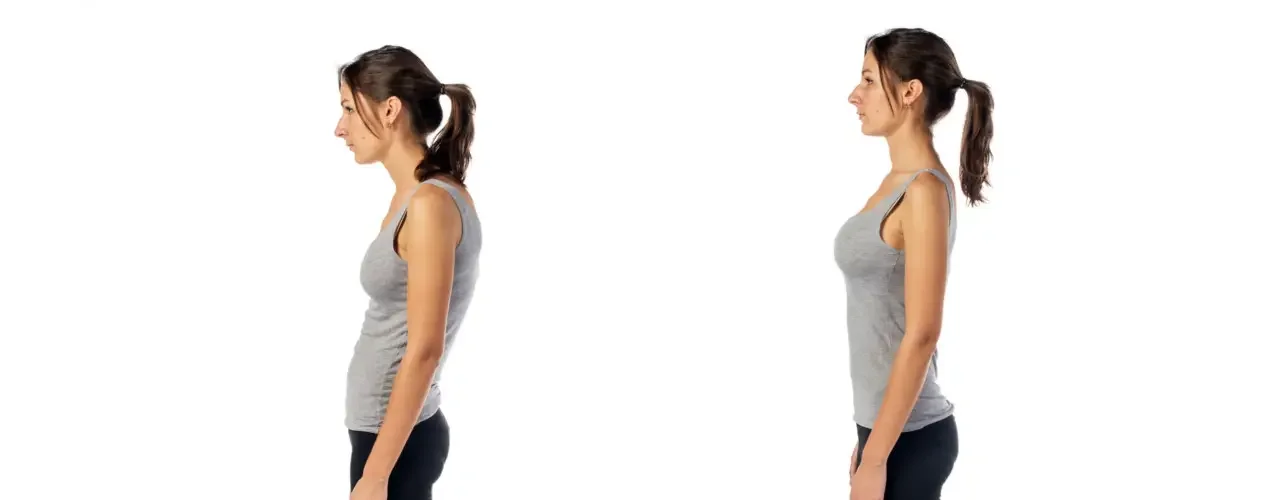
Compromised Posture Frequently Acts as the Underlying Reason for Neck Pain, Tension Headaches, and Lower Back Pain
Many patients who enter our practice are convinced they are not presenting with a postural condition. The complaint is typically their neck, a severe headache or even "I have just been under a lot of pressure of late."
This is what we encounter consistently in Urbandale: headaches, tight shoulders, and a sore lower back by mid-afternoon. In fact, all of it is usually related to how one person has been holding their body for months or years. The pain is not fake; the location is just wrong.
Consider your daily routine. Sitting in a desk staring at a monitor often involves the chin pushing forward or your shoulders rolling inward and creating great stress on the cervical spine. The National Institutes of Health report that a mere 15 degree head tilt doubles the pressure on a neck's supporting muscles. At 60 degrees the pressure is nearly 60 pounds. That is what the average person experiences, sitting at their desks, for hours each day.
What effect does this have on the body? A few things usually go along with this:
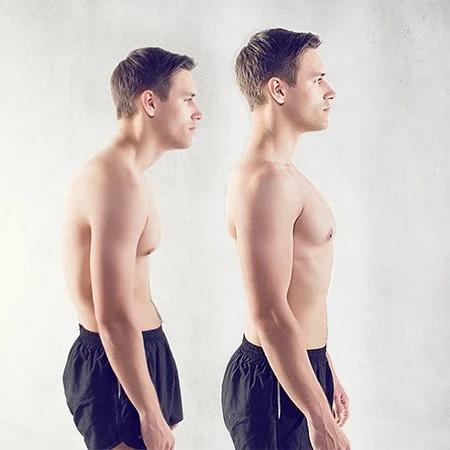
Occurring headaches that are the result of muscle tension originating in the neck.
Middle back tightness and/or pain that never seems to resolve.
One shoulder is noticeably higher than the other.
Back pain in the area after sitting for a lengthy period.
So when someone brings that complaint up, it is usually posture related. It is not about growing older or simply a stroke of bad luck. It is simply a pattern of behavior that has occurred over a long period of time that the body has ultimately determined is no longer tolerable.
Children aren't immune to this issue either. We are actually seeing a much younger population coming into our Meredith office, from teenage athletes to even elementary aged children all presenting with that same forward head posture that has traditionally been considered an 'adult problem'. Technology has shifted that very quickly.
The reality of the matter is that a person responds positively to postural correction when the underlying issue is targeted. Some stretching can help; if the spine is not corrected and muscles retrained, the problem will inevitably return. So, when it comes to postural analysis and correction, the goal is not to simply stand straighter, but rather to investigate the reason why you don't.
Learn More about NIH study on the effects of forward head posture
Exactly What Is Covered During a Postural Analysis & Correction Appointment

Many patients come to us without knowing precisely what to anticipate. That is perfectly fine. Because a postural analysis & correction appointment is not something most people have had before, I will explain in some detail just what takes place.
First we watch. Watch your natural posture, your head position, if one shoulder is higher than the other. We can see a lot about how a person holds their body prior to even sitting down. It happens constantly. Someone walks in thinking their lower back is the problem, but really, it begins with that head carried forward over a phone. From there, we follow a set pattern when the patient:
Postural screening front, side, and back
Range of motion tests
Spinal palpation
Lifestyle, job, sleeping, activity level questions
Review of findings with you before anything else happens.
After we've gone over the findings, we'll discuss postural correction options for you and your body. That may include a variety of adjustments, as well as guidance through certain exercises. Sometimes we may offer other services, such as near infrared light therapy and sports massage therapy, depending on your needs. And we won't do anything before explaining it to you. That's just how we do it.
I like last point especially. Because we talk about what we find and explain what's going on. Lots of people come into the clinic in Urbandale, thinking they just need to get adjusted. However, when we see a patient's posture, it usually isn't something that just happened. It's been building up for months and months. It's a pattern. Forward head from desk work. Uneven hips from carrying a kid on one side. Rounded shoulders from years of driving. And all of these are related to your neck, headache, and back issues.
That knowledge is the starting point that will help you to know what to ask and make the best decisions about how to proceed. The nature of the injury and the severity can change the way that treatment takes place, and knowing that is a piece of information.
Here's how postural correction works at Levels Family Chiropractic in Urbandale. Most patients walk through the door in our clinic in Urbandale thinking they just want a crack and they'll be fine. And that isn't how postural correction works. Or that is not how you'll get good results.
Postural correction takes time. It takes a few visits to figure out where your body is compensating and what's tight and weak and ignored. But you can't get good results if you don't look at the whole body, at the way you hold your shoulders, and the way you hold your spine.
Here's what happens when you come in:
We do a full postural analysis: look at your head position, height of shoulders and hips, and side curve of your spine
We look at a pattern of why the shoulder hurts isn't the problem, but the issue is lower and pulling the shoulder out
Adjustments to the spine at the segments being pulled
We show you what we find and why you can see and understand.
Our correction plan will depend upon how long the pattern has been present and what your body will tolerate.

I see this same narrative walk through our doors each week in Urbandale. A person comes in after years of desk work, or years of lugging their kids around, or years of exercising with poor mechanics. Their bodies have adopted a position that it was never intended to be in long-term, and this position eventually starts to hurt.
It’s not an unbreakable pattern, though. The human body is so adaptable, and if it went into the pattern it can get out of it. It may not happen instantly, but with consistency on our adjustments and a little consciousness on your part it absolutely can happen.
We may also combine postural correction with other services we offer, such as back pain treatment or neck pain treatment, as needed. Nothing is isolated to one area; your head position impacts your neck, your lower back, and even your sleep.
We explain everything along the way. There will be no surprise, no jargon, no confusion, just a clear explanation of the issue and a plan to correct it.
Postural Concerns for Office Workers, Families, and Active Adults

In Urbandale, most of our patients have no idea that they have a posture problem. They walk in complaining of neck or shoulder pain or of being exhausted by 2pm. And we show them how all those things are related.
Office workers are probably the largest group we see, and they’re a common complaint in our office. They are in a chair for eight to ten hours and they are looking down toward their screens. For every inch your head moves forward from the midline, it adds an additional ten pounds of load on your spine. It’s not scaremongering; it’s just physics. And it doesn’t take many hours to get a substantial load on your spine.
But it’s not just people who are in an office all day; we find these postural challenges in many different contexts, such as:
Children spending hours on tablets or phones with their chins down and their shoulders forward.
Parents carrying babies on one hip for months, creating a real lean they don't even notice.
Athletes who are training hard but don’t correct the positional shifts their sports create.
Seniors who have been hunched over forward for decades and assume they are just aging.
The last one just tears at my heart. It is not aging; in fact, that is one of the most pervasive misbeliefs I fight against. It can be corrected. Most of the people we see around Meredith Drive and the 86th Street area have both parents working with lots of things going on around them and they don’t stop long enough to notice they’ve been compensating in their body. If something starts to really hurt, that pattern has likely been present for many months already.
A lot of our patients in active adults don’t even know they have these problems and don’t realize how much their sports or exercise routine can shift them to a bad posture. They're running three days a week. They're lifting twice a week. Things seem good.
If those hip joints were rotated to the left, or if their thoracic spine wasn't moving very much, what happens? You load your system more. If you're already doing this, now they're just overloading the frame that they have. You're building in the likelihood of overuse injury in some way, shape, or form. And whether you are standing at your desk or taking care of a seven year old and chasing them around on a soccer field, posture is key for life. And I am not talking in years, I am talking in the moment.
After energy comes the feeling of: my shoulders do not hurt as much on the way home. Or my kid was playing soccer today and I did not have to sit on my chair for 10 minutes, move for 10 minutes, sit for 10 minutes and just keep doing that. It is these moments, where your body is telling you something is shifting that really matters to me.
Now I have people look for certain things in their body, and these are the things we look at during every initial postural assessment and when we come back in. You notice your head resting on top of your shoulders, not sitting in front of your shoulders. You notice you start catching yourself just sitting up straighter than you were. Headaches that used to hit three or four times a week start spacing out.
The things you do not think twice about. You are able to look to the left and to the right, to reach overhead, to just bend and not have to brace yourself like you used to. You are sleeping better at night because your body is not under tension. And we look at all of this from day one. You start off with the postural assessment. If you come in for a reassessment a few weeks later, you want to see exactly what we have. Not guess. We see it in your body. In fact, what is beautiful is sometimes you can feel that it is starting to work before you actually look at the evidence in front of you.

Your partner will ask what you have been doing, and you are not really sure why they are thinking, "Maybe it has something to do with the work you're doing?" Someone in your work life is saying, "Why have you started working out a little bit more recently? What are you doing, you look different to me?" That is what posture looks like: someone else is starting to notice the way you are carrying yourself, and you just do not even see it. It is more common than people believe.
At Level Family Chiropractic, I always want people to realize that this is not a one-time event. If you go into the office once, we are going to see that needle is moving. The more often you do that, the more the needle is going to move. If you are anywhere near the Settlers Ridge area and have been sitting on this, you might want to come and find out where you are right now.
The beauty about posture correction, the beautiful part, is that your body has plasticity. Your body has adaptability. And with the right input we can change that. You're going to start to think to yourself: "Am I doing this? Is it actually working?" That is one of the most common questions I receive. People come in. We start. We make a few weeks. They start thinking to themselves: Is it working? Well this is what I tell them every time. You will start to see it, you will start to feel it. It is not going to be dramatic. This is what I think most people miss, is you are going to see it first.
And once you start seeing it, you start noticing it everywhere. But this is the first thing I have people to notice. It is not pain relief that happens first, it is energy. Once your spine begins supporting you in the way you should be supported, your muscles stop working so much to keep you upright. That constant feeling of tiredness that a lot of us here in Urbandale think is normal is starting to be lifted a little bit. You do not feel like you are dragging through your day anymore.
Frequently Asked Questions
How long does postural correction actually take to work?
Most people start noticing changes within a few visits, but real correction takes longer. Your body spent months or years building the pattern it needs time to unlearn it. We typically see Urbandale patients work through a correction plan over several weeks. How fast you progress depends on how long the pattern has been there and how your body responds to adjustments and retraining exercises.
What should I expect at my first postural analysis appointment?
We start by watching how you naturally hold your body before you even sit down. Then we check your posture from the front, side, and back, test your range of motion, and feel along your spine. We also ask about your job, sleep habits, and daily activity. Before anything else happens, we go over every finding with you and explain what we see. Nothing is done without your understanding first.
Is postural correction just stretching, or is there more to it?
Stretching alone is not enough. If the spine is not corrected and the right muscles are not retrained, the problem keeps coming back. At our Urbandale clinic, correction includes spinal adjustments at the segments being pulled out of position, targeted exercises, and sometimes additional support like sports massage or near infrared light therapy depending on what your body needs.
Can posture problems cause my headaches and neck pain?
Yes and this is one of the most common things we see. Tension headaches and neck pain are often caused by forward head posture, not a separate condition. When your head tilts forward even 15 degrees, it doubles the load on your neck muscles. At 60 degrees, that load reaches nearly 60 pounds. If you sit at a desk in Urbandale for hours each day, that stress adds up fast.
My kids use phones and tablets constantly. Can children develop posture problems too?
Yes, and we are seeing it more and more. Younger patients including elementary-aged children and teen athletes are coming into our Meredith office with forward head posture that used to be considered an adult problem. Screens have changed that quickly. If your child complains of neck tightness or headaches, it is worth getting their posture checked before the pattern becomes harder to correct.
What if I think my back pain is just from stress or getting older?
That is exactly what most of our patients say when they first come in. But pain from stress or age is often posture working against you over time. Rounded shoulders from driving, uneven hips from carrying a child on one side, or a forward head from desk work these patterns build slowly. They are not permanent, though. The body adapted into the pattern, and with consistent correction, it can adapt back out.