
Can Chiropractic Adjustments Correct or Improve Scoliosis?
Chiropractic care does not correct structural scoliosis, but it can help manage symptoms such as pain, stiffness, and reduced mobility. This article explains how scoliosis is diagnosed, the role of Cobb angle measurements in treatment decisions, and how chiropractic care may support better spinal function and quality of life as part of a comprehensive scoliosis management plan.
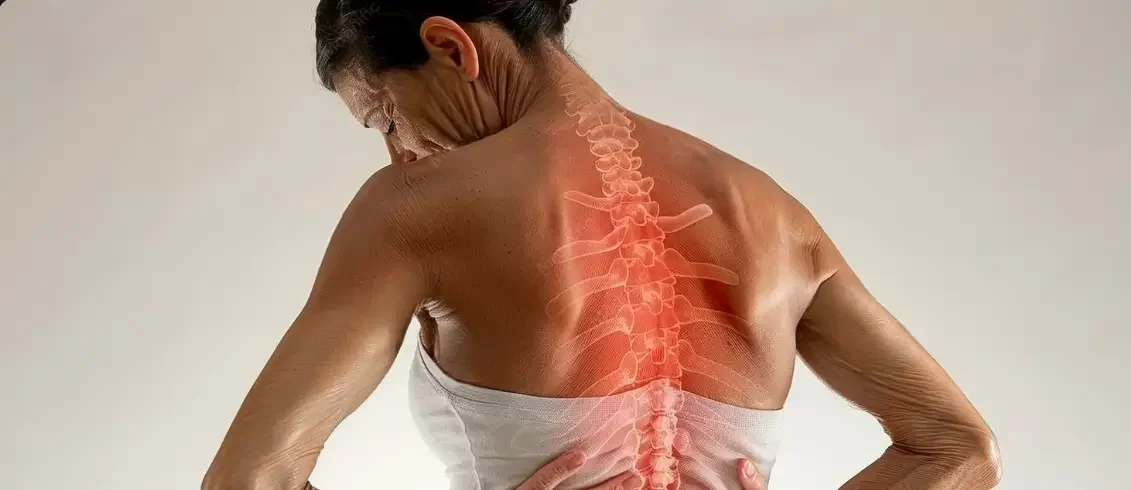
What Scoliosis Actually Is, and Why the Spine Curves
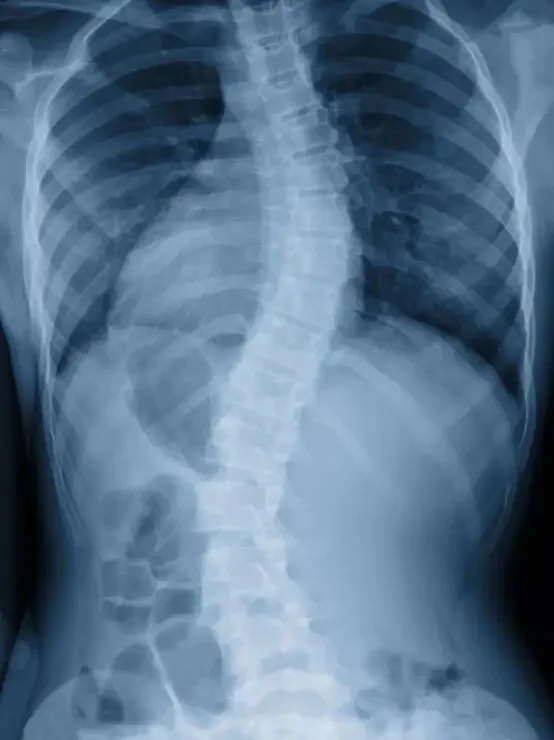
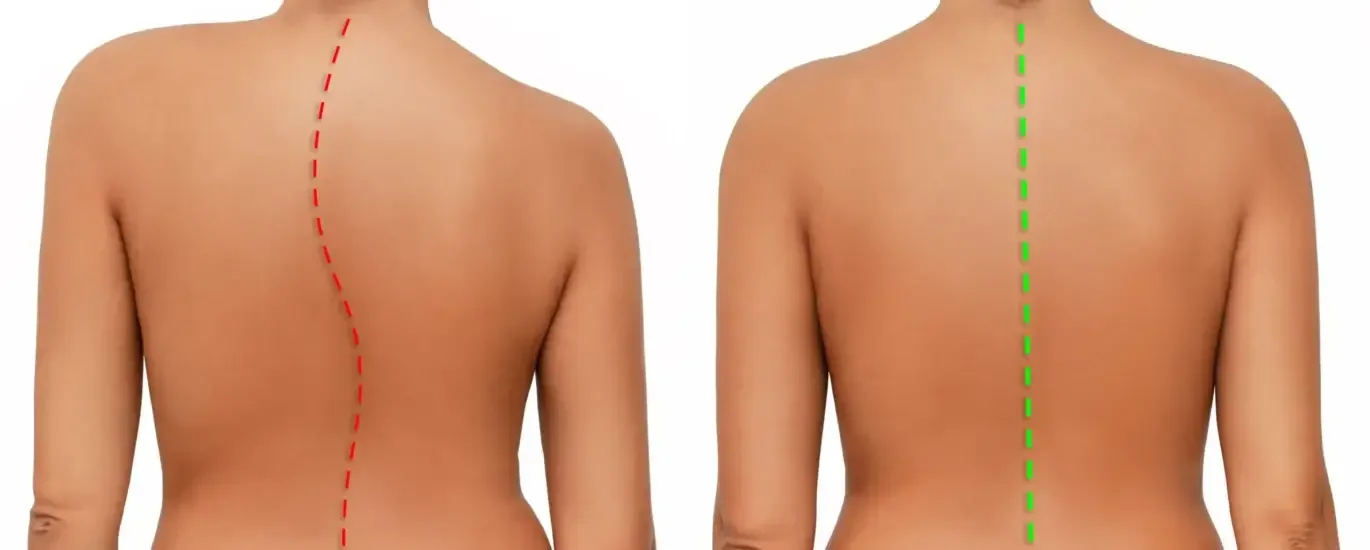
When most people imagine a curved spine, they're thinking of poor posture. That is not scoliosis, but a sideways curvature of the spine (and in many cases, rotational deformity) is the hallmark. And this rotational deformity is the least known feature of scoliosis and a reason why scoliosis goes beyond "bad posture".
When viewed from the side, the healthy spine is expected to have a certain degree of curvatures. When viewed from the front, however, the spine should be perfectly straight. The front-view image of a scoliotic patient has the spine in a curvilinear fashion, usually either "C"-shaped or "S"-shaped. The American Association of Neurological Surgeons says 2% to 3% of people in the United States suffer from scoliosis, equating to 6 to 9 million individuals.
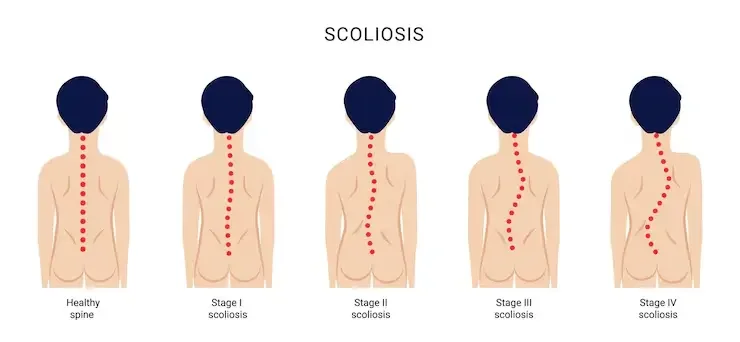
The idiopathic scoliosis case is what most Urbandale families find themselves in once a school nurse screens the child's back for a problem. It's also the most frequent reason to ask about the potential use of chiropractic adjustment as a treatment.
We see this frequently in our office. A parent walks in to our office concerned about scoliosis after a school nurse points out that their child's shoulders or hips are unbalanced. The parent has done some online research and is now confused and seeking guidance. This is a perfectly acceptable place to begin.
Idiopathic scoliosis can happen for a variety of reasons. Although scientists do have some theories (i.e., genetics, muscle strength imbalance, imbalance of brain function and equilibrium, etc.), they do not yet have conclusive evidence as to what causes idiopathic scoliosis. This means that there is no singular "best" option for scoliosis treatment at this time.
What we do know is the significance of the degree of the curvatures. We use an apparatus known as a Cobb angle to measure the degrees of curvature of the spine. Any spine with curvature of less than 10 degrees is not considered scoliosis. Curvature degrees of 10-25 are often closely monitored, but 45-50 degrees and higher are usually surgical candidates.
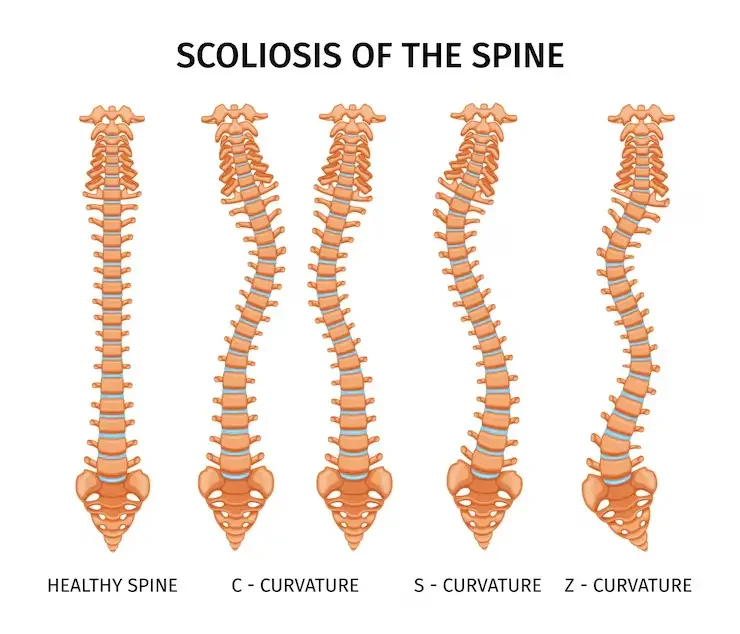
The Different Types Worth Knowing
Not all forms of scoliosis are alike, and each presents different opportunities (or impossibilities) for what chiropractic adjustments may or may not do for you. Here's an overview of some different types you may hear about:
Idiopathic scoliosis, the most common, with no known single cause. Occurs mostly in adolescents, during the adolescent growth spurt.
Congenital scoliosis, present at birth, due to abnormal development of vertebrae (bones of the spinal column) while a fetus is developing in a mother's womb.
Neuromuscular scoliosis, related to neurological (brain, spinal cord, nerve roots) or muscular (spinal muscles) conditions, such as cerebral palsy or muscular dystrophy.
Degenerative scoliosis, develops in adults due to age-related wear and tear on the intervertebral discs and facet joints. It is typically seen in older patients.
This intermediate range, between 10 and 45 degrees, is where the conversations about nonsurgical treatments, such as a chiropractic adjustment, usually take place.Many don't realize this until someone breaks it down to them; scoliosis is a three-dimensional issue.
The scoliotic spine twists, in addition to curving inwards. It is the reason one shoulder blade in an individual with scoliosis might sit further out than the other, or why rib humps can be observed when bending forward.
However, the scoliosis curve is not the only variable when considering care choices; the age, skeletal maturity and rate of curve progression matter. A 12-year-old, for example, will be in a far different stage of scoliosis treatment than a 45-year-old, whose curve has been stable for decades.
The first step in any discussion about scoliosis treatment, and chiropractic adjustments included, is understanding what type of scoliosis you or your child has.
What Chiropractic Care Can and Cannot Do for a Scoliosis Curve
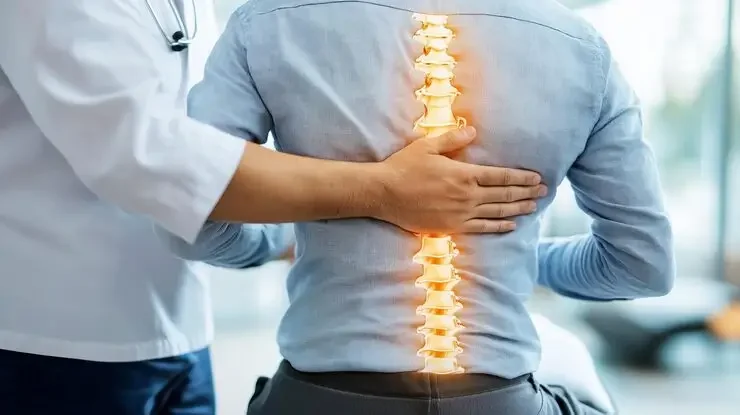
Let's be real; this is what you really want to know, and this is the most frequent question that we get. I'm not going to sell you something that isn't true.
Chiropractic adjustments do not straighten out scoliosis curves like surgery. If someone is suggesting that they can correct a structural scoliotic curve in the body, then they are not being genuine with you.
Structural scoliosis has been present for years, meaning that the bones, discs, and tissue have adjusted themselves to this deformity. The bones have changed shape, and any chiropractor can tell you straight out that an adjustment cannot undo that in one day.
What Chiropractic Care can Do for Your Scoliosis Curve
Scoliosis affects not just the spine itself, but the whole body; the nerves and soft tissue all respond to the structural deformity. Muscles tighten on the concave side of the curve, while the muscles on the convex side of the curve get weaker. Discs and joints get worn down, and joints and discs in a scoliotic spine don't move and articulate the way they should. It is these secondary effects that often manifest as pain and fatigue.

Through chiropractic adjustment, we can assist the body's own system. We frequently witness this in practice: patients will enter the office feeling hunched over and in pain, and after consistent chiropractic care, patients will be taller and moving with ease, which will also improve their sleep.
This doesn't mean that their curve is straightened, but it does mean that their joints are functioning more like their joints should.
Chiropractic adjustment in a scoliosis case can do the following:
Decrease joint stiffness in a scoliotic curve
Decrease nervous interference from the joints and spinal segments
Decrease muscle tension on the concave side of the curve
Improve posture with postural correction and postural analysis
None of these is a trifling matter, however.
For a person a scoliosis diagnosis in Urbandale, the gap between a day defined by stiffness and pain and one where daily activities feel manageable is significant.
What Chiropractic Care Can't Achieve
I recall a client, a mother residing in the Urbandale vicinity, who had been informed years earlier that she possessed a mild curve and that there was "nothing to be done." She initially sought relief for back pain, unaware of the link between her symptoms and her spinal curvature.
Following a postural evaluation and a series of adjustments over several weeks, she remarked that she felt more like her authentic self than she had in many years. The spinal deviation remained, yet her musculoskeletal system was functioning with greater harmony around it.
That is the authentic objective. Not a. Rather, a spine that operates more effectively.
And that has substantial value. Improved spinal mobility reduces the strain on surrounding musculature. It allows for more precise neurological communication. It simplifies the rhythm of everyday living., if you are holding a scoliosis diagnosis while questioning the potential for intervention, intervention exists. It may, however, differ from conventional assumptions.
If you are curious if chiropractic management is appropriate for your particular curvature, a postural assessment offers an ideal starting point. It provides transparency regarding your specific condition and yields a definitive answer.
Chiropractic treatment is unable to remodel altered bone architecture. It cannot serve as a replacement for bracing in a pediatric patient with an advancing curve. Nor does it supplant the need for an orthopedic consultation when the curvature reaches a critical stage.
The American Association of Neurological Surgeons states that curves exceeding 40 to 50 degrees frequently necessitate a surgical consultation. Such a clinical benchmark falls outside the scope of chiropractic intervention.
The majority of scoliosis patients seeking our services present with mild to moderate cases, specifically curves measuring below 40 degrees. This is precisely the range where chiropractic care often provides the most meaningful benefit. Not by straightening the deformity, but by optimizing spinal mechanics and mitigating the cascade of compensatory issues that frequently arise.
The Protocol for Chiropractic Evaluation of Scoliosis
No individual with scoliosis should enter a chiropractic clinic and immediately receive an adjustment. That approach is inconsistent with standard of care.
Prior to initiating treatment, a chiropractor must thoroughly comprehend the specifics of the spinal condition, which necessitates a assessment rather than a cursory glance or assumption.
We encounter this omission frequently, and it presents challenges. A thorough examination enables the chiropractor to identify the location and magnitude of the curve, as well as to determine if chiropractic adjustment is the appropriate intervention for your case.
Components of the Initial Consultation

This is not just a checklist. Each of the above helps the chiropractor build a clear picture of your condition. When combined with each other, they allow the chiropractor to determine if the curve is structural or functional or both.
X-Rays Play a Huge Role in This
X-ray imaging is very important to the chiropractic management of scoliosis. It provides the chiropractor with a tool to measure the Cobb Angle, which is a method for measuring how severe the curvature of the spine is. According to the Scoliosis Research Society:
A scoliosis curve less than 10 degrees is not considered to be scoliosis. Curves ranging from 10-25 degrees is considered mild scoliosis. This matters as a curve is treated much differently from 10 degrees than it would be at 25.
Without an X-ray the chiropractor cannot determine how severe a scoliosis curve is and they are left to speculate. Speculating on a scoliosis curve is never acceptable practice.
The measurement of the Cobb angle also helps to inform the chiropractor if they can be of service or if a referral to an orthopedic specialist would be more beneficial. It is not a sign of weakness for a chiropractor to refer you to another practitioner; on the contrary, it is a reflection of integrity and wisdom. A chiropractor who knows their limitations is one you should be grateful for.
Typically, the procedure begins with a review of medical history. You will discuss the onset of the curve, your current symptoms, and factors that alleviate or exacerbate the discomfort.
For younger patients especially, parents are often the ones who provide much of this information. This background knowledge helps set the stage for everything to follow.
Next is the physical exam. Here is what a conscientious chiropractor will be observing as part of that exam:
An assessment of posture while you stand to your front, back, and side. Often, uneven shoulders or hips are the first sign of scoliosis
The Adam's Forward Bend Test in which you bend forward at the waist. This allows the chiropractor to identify a rib hump or uneven rise of the muscles
Leg lengths, a short leg can create what looks like a structural curve but is actually a functional scoliosis
An assessment of the range of motion for your spine, hips, and shoulders
A neurological assessment
Putting It All Together Before Adjusting the Spine

Once the physical exam and any imaging is complete, a good chiropractor will take the time to explain what they have learned and show it to the patient. I not only want patients to understand the diagnosis, but I also want them to understand why.
I always like to walk the patient through their own X-ray so they can literally see the curve of their own back. Most people have never had the opportunity to really look at their own spine and it gives a new meaning to the conversation.
This is particularly relevant for Urbandale families bringing in a teen who has been diagnosed during a scoliosis screening at their local school. It provides an opportunity for them to have a discussion about what their particular scoliosis looks like, if it meets the clinical thresholds, and what we realistically expect chiropractic care to be able to do for them.
This dialogue is the foundation upon which the treatment will be built. It is an opportunity to foster trust with the patient and their family. This discussion also helps the chiropractor with postural analysis and corrective exercises. Often times, these will be part of the work with a patient undergoing chiropractic care for scoliosis and it is important for them to understand how those are linked and complimentary treatments.
In short, when your chiropractic care for scoliosis does not include a thorough initial assessment such as this one, you may not be receiving the best possible care. An assessment like this is not an unnecessary delay. It is the necessary foundation upon which everything else must be built.
Frequently Asked Questions
Can chiropractic adjustments actually straighten a scoliosis curve?
No, chiropractic adjustments cannot straighten a structural scoliosis curve. The bones, discs, and soft tissue have adapted to the curve over many years. Chiropractic care can reduce joint stiffness, ease muscle tension, and help your spine move better — but it does not reshape bone. If someone tells you they can fully correct scoliosis with adjustments alone, that claim is not supported by evidence. What chiropractic care does well is manage the secondary effects of scoliosis, like pain and reduced mobility.
Is chiropractic care for scoliosis different for kids versus adults in Urbandale?
Yes, age and skeletal maturity change the picture significantly. Many Urbandale families first learn about scoliosis after a school nurse flags an uneven shoulder or hip during a routine screening. A 12-year-old whose spine is still growing needs a very different approach than a 45-year-old with a stable curve. In younger patients, there is more concern about curve progression during growth spurts. In adults, the focus often shifts to managing pain and maintaining function. A chiropractor familiar with scoliosis will consider both age and curve behavior before recommending a care plan.
Is scoliosis just bad posture? A common misconception worth clearing up
No, scoliosis is not the same as poor posture. This is one of the most common misunderstandings we hear. Scoliosis is a three-dimensional problem — the spine curves sideways and also rotates. That rotation is why one shoulder blade may stick out further, or why a rib hump appears when bending forward. Poor posture can be corrected with habit changes. Structural scoliosis involves actual changes to bone shape and spinal alignment. Treating them the same way leads to frustration. If you want to understand what is actually happening in your spine, our chiropractic care for scoliosis page breaks this down further.
What is a Cobb angle, and why does it matter for scoliosis care decisions?
A Cobb angle is a measurement used to determine how many degrees your spine curves. It helps guide treatment decisions. Curves under 10 degrees are not classified as scoliosis. Curves between 10 and 45 degrees are where nonsurgical options — including chiropractic adjustments — are most often discussed. Curves above 45 to 50 degrees are usually referred for surgical evaluation. Knowing your Cobb angle helps you and your chiropractor have an honest, focused conversation about what kind of care makes sense for your situation.
What is the difference between idiopathic scoliosis and other types — and does it affect chiropractic options?
Yes, the type of scoliosis matters. Idiopathic scoliosis has no single known cause and is the most common type seen in Urbandale families. Congenital scoliosis is present at birth due to abnormal vertebrae development. Neuromuscular scoliosis is linked to conditions like cerebral palsy. Degenerative scoliosis develops in older adults from wear on discs and joints. Chiropractic adjustments are most commonly discussed for idiopathic and degenerative cases. Congenital and neuromuscular scoliosis often involve more complex medical management. Knowing your type helps set realistic expectations for what chiropractic care can offer.
When should an Urbandale resident seek a chiropractic evaluation for scoliosis versus waiting to monitor it?
You should seek an evaluation sooner rather than later if you or your child has been told a curve exists — even a small one. Curves between 10 and 25 degrees are often monitored, but that monitoring works best when a professional is involved. Waiting too long during a growth spurt can allow a curve to progress without you noticing. A chiropractic evaluation can help track joint function, muscle balance, and movement quality — even if the curve itself does not require immediate intervention. Early assessment gives you more options, not fewer.