
Self Chiropractic Adjustments: Safety & Risks Explained
Self-cracking your back or neck may feel good temporarily, but it does not correct the underlying cause of pain and can sometimes make problems worse. This article explains the risks of self-adjustments, why chiropractic adjustments require professional training and precision, and how to recognize when recurring stiffness or discomfort warrants a professional evaluation.

Cracking Your Own Back Is Not the Same as a Chiropractic Adjustment
When a person hears the satisfying "pop" coming from their own spine after a self adjustment and then feels some relief, it is easy to think, "Oh that's what a chiropractor must do." Not so! At all, in fact.
When you sit in a chair, turn and hear a noise, or pull your knee up to your chest and hear that same pop, those noises are from gas bubbles in your joint fluid being released from your joints. That popping feeling feels good and provides a temporary sense of "relief", but you have not had your joints adjusted! You have not fixed any subluxations nor any misalignments, nor are you relieving any nerve interference. Your body just made noise.
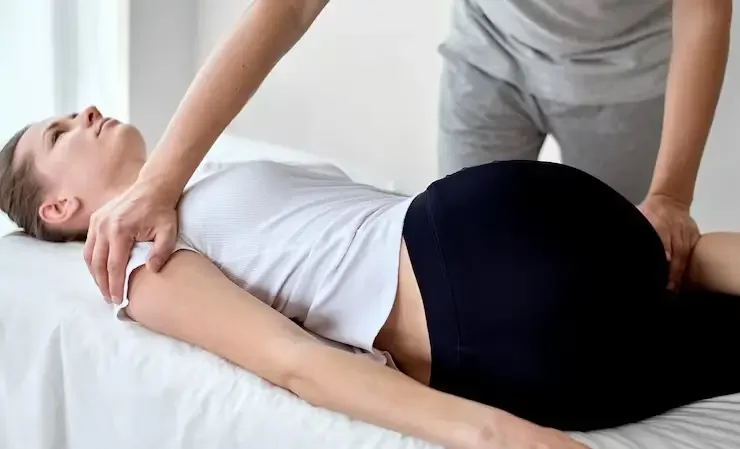
That's a very different feeling from a chiropractic adjustment. Chiropractic adjustments are specific adjustments where force is given to a specific, immobile joint. A chiropractor uses years of education and training to be able to apply this force in a specific location, in a specific direction, in a specific manner. Your chiropractor knows this not through intuition, but through your clinical postural assessment.

Your back just moved around it and now the other muscles are strained and inflamed. This is where many of our patients come from because of overstretching.
This is why you see this so often, the patient who says "I just cracked my neck" after having it done all the time throughout the day. The more you do that, the more your body will become accustomed to that, which will eventually lead you back to the chiropractor, but it won't necessarily be a.
When You Self-Crack, This Is What You Are Doing
What most of your patients don't know is when a person cracks their own back, they are usually cracking the very joints that do not need cracking!
It is the joints that are too loose that get to move, so of course those are the ones you are going to crack. The very segments that you are trying to fix (that have limited motion, causing your discomfort), are going to remain stuck.
We hear this all the time. A person says, "I cracked my back last week and I felt so much better." Then they ask why they should keep seeing a chiropractor when they know how to "crack" their joints themselves.
A quick assessment on our end reveals a postural imbalance in their back. When we do our postural assessment, the restricted segments in their back are still restricted.
What Happens During a Chiropractic Adjustment? Is It Just a Twist?

A chiropractor goes through several years of training before he ever touches a patient. They have had extensive courses that study anatomy, and neurology, and the function of the human body.
Chiropractors undergo hundreds of hours of hands-on training to perfect their adjustments in the classroom.
There may be a quick click as they perform that adjustment, but there is a lot more to an adjustment that goes on before that happens, including how a patient moves, what needs adjusting and why.
You have to be precise with the force you use. If you use too little, there will not be any movement. Use too much force and you'll cause more irritation to that tissue. You have to know how much to use, and you just can't tell when you are trying to twist or pull on your leg against a chair back.
This is the kind of difference that actually counts for us here in Urbandale, particularly if you’re one of those folks whose feet are glued to the floor or if you’re spending long hours slumped over a laptop screen. Self-cracking is not maintenance, it is a bad habit. And bad habits often exacerbate the problem you’re trying to fix, even as you convince yourself you’re on top of it.
However, there’s a bright side. Once you’ve learned what a legitimate chiropractic adjustment accomplishes, it re-frames your perspective about your spine. This isn’t about the pop. It’s about re-establishing normal joint motion so your nervous system can function without any obstacles.
If you’ve been cracking your own back to get the relief you need, yet the relief keeps fading away, know that you’ve got a problem that hasn’t been solved yet. That’s when you should stop guessing and get a real evaluation. You can see the difference by reading through our chiropractic care page for an introduction to our actual exams and first visits.
You Should Know The Actual Risks Before Attempting Self-Adjustment

People don’t self-adjust because they’re looking to get themselves into trouble. They self-adjust because their neck is tight or their lower back feels locked, and they just want some ease.
Yet what happens all the time when people begin to self-adjust: they eventually arrive for chiropractic care months or years later, and they have more issues than they began with.
Just to clarify that point, the pop you hear is not necessarily coming from where you think.
If you twist your neck or yank on your spine, what you are not doing is isolating a specific joint for attention, nor do you have the capability to.
Your body takes the path of least resistance. In other words, it’s the joints that move too much (the hypermobile ones) that end up “popping” in the process. It’s the stiff joints, the ones you actually need, that don’t budge. And what’s more, the more the loose joints are “cracked,” the more unstable they become.
The Real Issues to Understand

The second point is especially relevant if you’re one of those people who works in front of a computer screen in the office, or if you drive the I-35 corridor for significant lengths of time, or if you carry tension in your neck and shoulders. These are patterns of stress for your spine. Doing self adjustments, when you’re in one of these patterns, will not reset anything, but rather will compound more stress in a joint that has a hard time keeping up.
There’s also specifically the neck. Improper cervical manipulation, even from the patient themselves, has a small risk of tearing the vertebral artery. Trained chiropractors use a specific angle and amount of pressure, and you can't mimic this with your own hand. And the relief from cracking your back is mostly just endorphins; it is not moving a vertebra into place.
Your body just responds to the stimulus, and 20 minutes later, your body tenses back up. This leads to a cycle: crack your back, get a short-term relief, tension builds again, crack your back. This is one of the more common ways patients present that they turn an acute pain problem into a chronic pain problem.
These are not meant to be scary statistics. The point is to make you fully informed as you consider whether to make a habit out of something that may seem benign to you at first. With this in mind, here are the actual risks you’ll want to understand about self-cracking:
Overstretching of the ligaments in the neck or lower back, leading to long-term joint instability.
Aggravating the nerves adjacent to the spine so the symptoms of tingling or numbness get worse rather than better.
Hiding or masking the real problem. Self-adjusting can bring temporary relief from pressure without addressing the underlying problem that caused the pain.
Promoting the inflammation in joints that have already become irritated by poor posture habits, or an injury that happened long ago.

What I See All The Time
Someone comes into my office with this issue: they’ve been cracking their own neck for 2 years, and feel they need to crack it before they leave home in the morning. But the headaches aren’t getting any better.
And, of course, when we assess them, the patient's C0, C1 segment of the cervical spine is hypermobile and they can’t move the mid-neck region at all. That daily self-adjusting didn’t resolve the issue, it just moved it around. This is not a one-off. This is a trend.
If you feel like your neck or back needs to be popped multiple times per day, this isn't flexibility. This is a warning sign. Your body is saying something is wrong. The answer isn't to pop more, the answer is to find the root cause of that tightness.
Chiropractic adjustments by a chiropractor are done with a specific amount of force at a specific angle on a specific joint; that is the point. Otherwise, you're just cracking your joints.
If you're cracking your spine yourself, you're almost always hypermobile, or easy to pop off the hypermobile segments that you've already got.
The tight ones stay tight. All you're doing is making the loose ones more loose, loosening the ligaments even more, and making your spine even less stable.
According to the American Chiropractic Association, chronic neck and back instability can result from chronic, uncontrolled joint manipulation, resulting in hypermobility.
We see this quite a bit. Many of our patients tell us that they've been cracking and popping their spine on a daily basis for years because they think that it is helping with their discomfort.
In most cases, we'll see the opposite. We'll see the obvious hypermobile segments, but we'll be unable to find the stuck segment that actually needs help.
The Compulsive Popping Cycle and What It Indicates
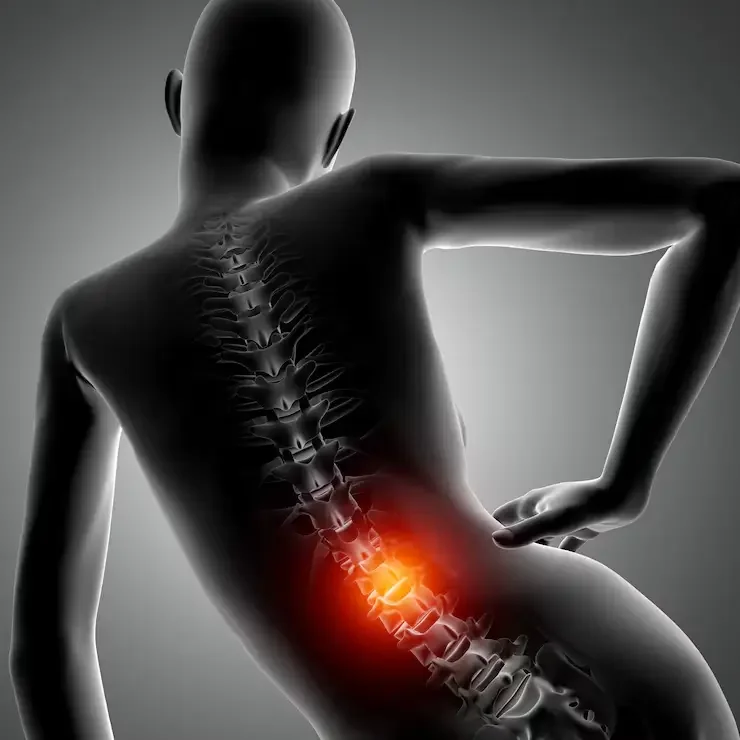
So when you're caught in a cycle of daily self-adjustments, it's a sign to seek help from a licensed doctor, not a sign to crack harder or more frequently. It doesn't tell you that you should crack it more; it tells you that you still don't know what you're doing. When you see a licensed professional, we can find where the stiffness is coming from, or why your spine is actually unstable, so that we can help you resolve your discomfort.
It's not about the pop, but about the fix!
Your neck feels tight. So, you twist it until it pops! Relief! But 20 minutes later it's stiff again, so you crack it again. And again. Most people only come to know this when it's too late: this cycle does not fix the problem; it perpetuates the problem.
This is what happens. Cracking your own neck or back involves releasing trapped gas from the fluid in your joint cavity. The popping noise you hear is called cavitation. It feels good momentarily because a small amount of endorphins are released. But the joint doesn't go into a new position, the problem tension is still there, your muscles still have guard tone, and the relief only lasts for a few minutes. So you crack the neck, or back again. That is the cycle.
The issue is that with repeated self-manipulation, the wrong joints are getting loose. In your spine, there are segments that are hypermobile, or overly loose, and segments that are hypomobile, or stuck.

If any of the following are true, then you may be doing more damage than good:
You have to crack the same segment multiple times a day to get any sense of normalcy
The relief you experience after cracking a joint gets less and less each time
You notice that you feel sore or tight after cracking, even if it's just momentarily
Your headaches keep coming back despite cracking your neck
This doesn't mean you need to crack it more, it means you need to have that joint evaluated!
I see this in many of my patients in Urbandale, IA. Many of my patients have long commutes into Des Moines, a busy job that requires sitting at a desk all day, and other issues that put strain on the neck and upper back. So it's no surprise that they may turn to cracking their spine on their own for relief. It's fast, it's convenient, and it often feels like it is helping.
But there is another problem : cracking your spine on your own may be dangerous to your health! In particular, you may be putting yourself at risk for injury if you aggressively crack your neck. There is a risk of dissection of the vertebral artery (one of the major blood vessels running through the neck) from forceful neck manipulation.
This is not necessarily common, though, there are many documented case studies in the scientific literature of this exact thing happening. It is even more concerning if the person manipulating the area doesn't know what he or she is doing. Chiropractors are experts in using safe, effective adjustments to release joints that are stuck and to realign the spine where there is an imbalance.
Frequently Asked Questions
Is cracking your own back the same as getting a chiropractic adjustment?
No, cracking your own back is not the same as a chiropractic adjustment. When you hear that pop, gas bubbles are releasing from your joint fluid. That's it. No misalignments are corrected. No nerve pressure is relieved. A real chiropractic adjustment targets a specific, stuck joint with a precise amount of force. Chiropractors train for years to know exactly where to apply that force and why. Self-cracking just moves the joints that already move too freely.
Why do Urbandale residents who sit at desks all day feel the urge to crack their own backs?
Long hours at a desk create muscle tension and joint stiffness, especially in the neck and lower back. That tight, locked feeling makes self-cracking feel tempting. But the stiffness you feel is often a sign that certain joints are not moving correctly. Twisting in your chair or pulling your knee to your chest only moves the joints that are already flexible. The stuck joints stay stuck. If desk work is part of your daily routine, a proper evaluation through chiropractic care gives you a real picture of what's going on.
What are safer alternatives to self-adjusting when your back feels tight?
Gentle stretching, walking, and applying heat to tight muscles are safer options than self-cracking. These approaches ease muscle tension without stressing your joints. Staying active throughout the day also helps, especially if you work at a desk in Urbandale. None of these replace a professional evaluation, but they are far less likely to cause harm. If your back keeps feeling tight or locked, that is a signal worth taking seriously rather than trying to pop away on your own.
Can self-cracking actually make your back or neck worse over time?
Yes, it can. When you crack your own neck or back repeatedly, you stretch the joints that are already too loose. Those loose joints become even more unstable over time. The stiff joints — the ones actually causing your pain — stay stuck. Many people in Urbandale come in for chiropractic care after months of self-cracking, and they have more problems than when they started. It feels like relief in the moment, but the real issue never gets fixed.
What is a common misconception about the 'pop' sound during a chiropractic adjustment?
Many people think the pop is the whole point of an adjustment. It is not. The sound is just a side effect of gas releasing from the joint. A chiropractor focuses on restoring normal motion to a specific, restricted joint. The pop may or may not happen. What matters is that the right joint moved in the right direction with the right amount of force. That level of precision is simply not possible when you twist yourself against a chair back.
When should you stop self-cracking and see a chiropractor instead?
Stop self-cracking and see a chiropractor if your relief lasts only a few minutes, if you feel the need to crack the same spot multiple times a day, or if you notice tingling or numbness. These are signs the underlying problem has not been addressed. The more often you crack a joint, the more your body depends on it — and the worse the original issue may become. A real evaluation identifies what is actually restricted and why, so you stop guessing and start getting lasting results.