
Can a Chiropractor Help With Vagus Nerve Dysfunction
Vagus nerve dysfunction may cause a wide range of symptoms, including digestive problems, fatigue, anxiety, poor sleep, and brain fog. This article explores the connection between the vagus nerve and the upper cervical spine, explains signs of decreased vagal tone, and discusses how chiropractic care may support healthier nervous system function.

How the Vagus Nerve Works and What Happens When It Fails
Awareness of the vagus nerve is nonexistent for most individuals. But it is probably one of the most critical and essential nerves in your entire body, as you experience any of its dysfunctions throughout your body. The vagus nerve extends from your brain stem, traveling down your neck and chest, and into your abdomen. It is your body's longest cranial nerve.
The vagus nerve serves as a major link in communication with the brain to your body's organs; the heart, lungs, stomach, and digestive tract would not work properly without it. According to an NIH study, the vagus nerve sends around 80% of the communication through your parasympathetic nervous system, which is associated with your body's recovery, rest, and digestive functions.
This is significant. Your parasympathetic nervous system is the exact opposite of a fight-or-flight response, as it helps your body to recover, relax, digest, regulate your heart rate, and sleep. This is all under the control of the vagus nerve, meaning that when the vagus nerve is not functioning as it should, your body remains in a stressful state and can't relax. To learn more about how this nerve operates throughout the body, WebMD's overview of vagus nerve function and dysfunction is a helpful starting point.
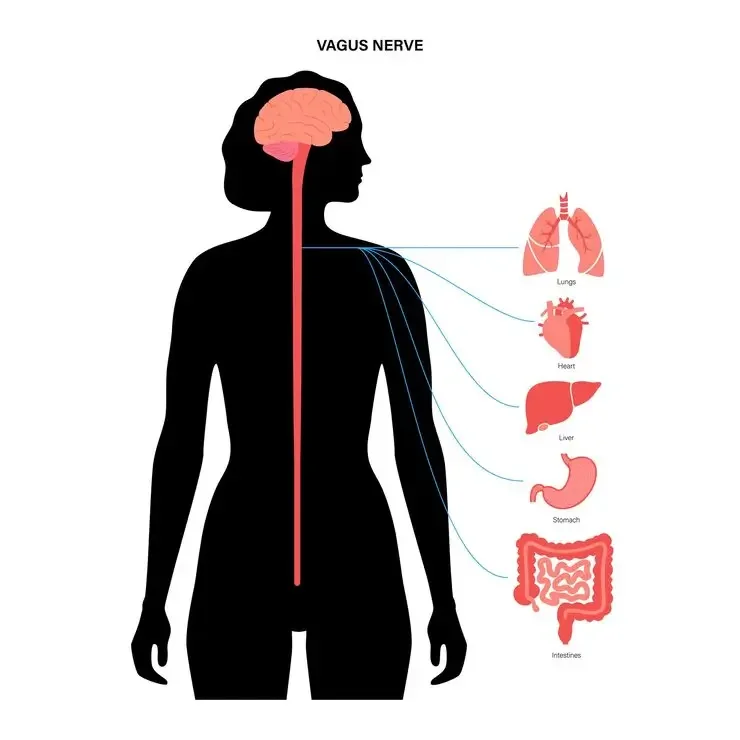
We see this very often, when a person comes in with complaints about neck pain and headaches, but then we go through a series of questions about the rest of their symptoms, and it becomes very clear their nervous system is constantly on. Poor sleep, digestion issues, feeling wired and tired. This isn't simply stress and it is more than that; their nervous system is stuck.
And what most don't know: the upper cervical spine, that is the region at the top of your neck, where the vertebrae meet the skull, is located right in the area through which the vagus nerve passes. This region can exert pressure on the vagus nerve structures when misaligned. It doesn't take much. A slight amount of tension or tension at the wrong location is enough to create noise in the connection between your brain and body.
In Urbandale, I work with many busy families that carry a massive volume of daily stress. A commute, sitting all day at a desk, kids being in extracurriculars, lack of sleep. These kinds of stressors overload the body's nervous system quickly. And when you couple a spine not being able to move as it should, that vagus nerve has even more to contend with.
So why does this relate to chiropractic care? It's because our spine and our nervous system aren't separate. They're connected. A healthy nervous system cannot exist in a spine that is jammed and tense. This isn't my take. This is just anatomy. The question is not is there an affect between spinal health and the vagus nerve. There is. The question is whether chiropractic can help restore vagal tone. It's beginning to seem this way.
What Vagus Nerve Dysfunction Really Looks Like
What may surprise many is what vagus nerve dysfunction looks like. It's not usually just one specific symptom; it's rather a collection of symptoms that seem unrelated, which is why so many individuals experience it for such long periods.
Some of the most common signs that we see include:
Long-standing digestion problems, such as bloating, upset stomach, or nausea
Abnormal heart rate, or a heart that races or flutters too fast or irregularly
Problems getting a full nights sleep even when fatigued
Feeling stressed or overwhelmed for no apparent reason
Regular headaches or feeling like you're thinking through fog in your head
Signs of Possible Decreased Vagal Tone

Most people have never heard of vagal tone. But they have experienced what happens when it is not right.
From the base of the brainstem, the vagus nerve runs down through your chest to your stomach and is responsible for so many different functions within our bodies. It is the "automatic" or involuntary actions within our body that the vagus nerve is involved with. And while that nerve isn't functioning correctly, we feel the effects of that throughout our body. One of the difficult things to deal with is that the signals or signals of the vagus nerve don't necessarily appear neurological.
Many times we see patients in the office that present a complaint for neck pain or headaches. However, after doing some history taking, there is another pattern we see that is often missed. Sleep issues. Digestive problems. Anxiety that seems to have no real underlying cause. At first glance, it seems that these all have nothing to do with one another, however, often they do.
Physical Signs

Vagal tone can often show up in different symptoms that seem to have little relation. Because of the variety of these symptoms, it is easy for it to be missed.
The most frequent physical symptoms include:
Persistent digestive complaints such as bloating, constipation and/or nausea with little explanation
Heart rates that feel fast or abnormal, especially at rest
Having trouble swallowing or an abnormal feeling of tightness in the throat
Repeated bouts of infections in the ears, a chronic hoarseness without illness
A tired feeling, even after a long night's sleep
There isn't no rhyme or reason. These are all related to the functions that the vagus nerve controls. When that nerve isn't firing well, these body parts start to become misaligned.
Psychological Signs

The vagus nerve is integral to the body's stress response. It plays an active part of what is sometimes called the "rest and digest" system, or the parasympathetic nervous system.
In a review published in Frontiers in Psychiatry, low vagal tone was associated with more anxiety, depression and stress intolerance. So if you think you might be perpetually fighting or fleeing, you should give it some thought. You may notice: anxiety disproportionate to the circumstances; trouble calming after stress; trouble focusing or "brain fog," even on relatively easy things; mood changes or irritability that seem to arise spontaneously.
And a lot of people in Urbandale have it without even naming it. They assume they're stressed. They ascribe it to a full calendar, long drives or a lack of sleep. But the stress response might actually be the issue, rather than the stress itself.
What It Looks Like in Kids

Children also suffer from poor vagal tone, and that is another reason I enjoy working with kids. If they're young, they usually cannot explain what is wrong, so you have to observe.
Signs include colic that resists standard soothing, poor eating and poor sleeping in younger children, and chronic headaches, frequent tummy aches in the morning and chronic hyperactive nervous systems in older kids. Parents tell me their child is either highly reactive or unable to settle after becoming dysregulated. Have any of those issues occurred to you?
If so, it's real. But there is hope, because poor vagal tone isn't a one-way street. The nervous system is changeable if we give it the appropriate input. It's the primary focus of chiropractic care, and many families inquire about vagus nerve dysfunction after a few visits.
How the Cervical Spine and Vagus Nerve are Structurally Linked
The Neurological Sensitivity of Upper Cervical Segments

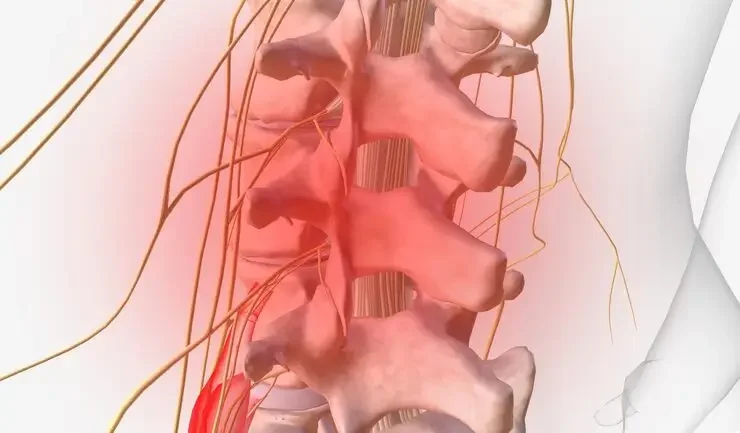
The upper cervical segment is one of the most neurologically sensitive regions of the body. The brainstem, controlling heart rate, breathing, and peristalsis, sits at the craniovertebral junction. Even the slightest displacement of the upper cervical can impact neurological function in a cascade pattern.
Imagine putting a kink in the garden hose; the water does not flow the same. The vagus nerve carries information back and forth from the brain to the organs and back again.
When upper cervical misalignments occur, this two-way communication can get disrupted. In a Journal of Upper Cervical Chiropractic Research article, researchers showed that after upper cervical adjustments there was significant improvement in vagal tone. This is not surprising. The upper cervical segment is anatomically related to the vagus nerve.
Most people don't think about where their vagus nerve sits, because it doesn't sit by itself. It's routed through a particular pathway, and one portion of that pathway goes through your neck.
Your vagus nerve starts at the base of your brain stem. It then exits the jugular foramen at the base of your skull and travels down the neck alongside the carotid artery, directly adjacent to your upper cervical vertebral levels (C1 and C2). It's a common observation we make in practice: When C1 or C2 shifts out of proper alignment, the surrounding tissue reacts. Muscles become more rigid. Swelling accumulates.
The vagus nerve, which is nearby, suffers collateral damage. This is a pattern we witness time and again in our practice. The patient walks in to the office complaining of "brain fog," a racing heart, or gastrointestinal distress with no medical basis. He or she has seen a medical doctor. The labs are normal. But when we look at the spine, there is a distinct subluxation at the upper cervical segment.
But what most people find so fascinating once they are sitting in the chair is that the symptoms of vagus nerve dysfunction are incredibly broad. Fatigue. Abdominal bloating. Anxiety. Palpitations. Disturbed sleep. Because it is connected with multiple organ systems, vagal dysfunction does not present as a single symptom. It presents as a number of symptoms.

The Role of Fascia in Vagus Nerve Health
It's also not just bone position that matters. Fascia is a connective tissue that runs from the muscles and surrounds nerves. And in the neck fascia is continuous. Tension from one area pulls on other areas.
So tightness of the scalenes or limited motion in the suboccipital region can apply mechanical forces to the tissue surrounding the vagus nerve without a direct misalignment.
This explains why a neck pain patient is often much better served by a holistic nervous system approach that looks beyond just the local neck pain and examines broader nervous system function.
Correcting a restriction in the neck does more than make the neck feel better. It also may improve the environment for the vagus nerve in that region.
For patients in Urbandale struggling with chronic fatigue or stress symptoms, recognizing this connection between the neck and brain can be important. Many times, the first link patients realize they have is the relationship between the movement in the upper neck and the quality of their sleep. The upper cervical vertebrae, however, are much more than an extension for the head, they are a neurological crossroad. The vagus nerve passes right through it.
Frequently Asked Questions
What does vagus nerve dysfunction actually feel like?
What does vagus nerve dysfunction actually feel like?Vagus nerve dysfunction often feels like a mix of symptoms that seem unrelated to each other. You might have bloating, poor sleep, a racing heart, and brain fog — all at once. Because these symptoms look so different, many people go years without connecting them. The vagus nerve controls your heart, digestion, and stress response. When it is not working well, your whole body feels off. It is rarely just one thing.
Is low vagal tone the same thing as chronic stress?
Is low vagal tone the same thing as chronic stress? Low vagal tone and chronic stress are related, but they are not exactly the same thing. Vagal tone refers to how well your vagus nerve is functioning. When tone is low, your body stays stuck in a stress response — even when nothing is wrong. A review in Frontiers in Psychiatry linked low vagal tone to higher anxiety, depression, and stress intolerance. Chronic stress can lower vagal tone over time. But low vagal tone can also exist on its own, driven by spinal tension or nervous system interference.
What is a common misconception about vagus nerve problems?
What is a common misconception about vagus nerve problems? A very common misconception is that vagus nerve dysfunction is purely a mental health issue. Many people assume anxiety or poor sleep is just stress, not a physical problem. But the vagus nerve is a physical structure. It can be affected by spinal misalignment, muscle tension, and inflammation — not just your mindset. According to the NIH, the vagus nerve carries about 80% of parasympathetic nervous system signals . That means it has a direct role in how your body physically functions every day.
Can self-cracking actually make your back or neck worse over time?
Yes, it can. When you crack your own neck or back repeatedly, you stretch the joints that are already too loose. Those loose joints become even more unstable over time. The stiff joints — the ones actually causing your pain — stay stuck. Many people in Urbandale come in for chiropractic care after months of self-cracking, and they have more problems than when they started. It feels like relief in the moment, but the real issue never gets fixed.
How do Urbandale residents' daily habits affect vagus nerve health?
How do Urbandale residents' daily habits affect vagus nerve health? Many people in Urbandale deal with long commutes, desk jobs, and packed family schedules. These habits put steady pressure on your nervous system every day. Sitting for hours tightens the upper neck and shoulders — right where the vagus nerve runs. Add poor sleep and high stress, and your body rarely gets a chance to recover. That constant load makes it harder for your vagus nerve to do its job. Small daily habits stack up fast, and your nervous system feels all of it.
Where can Urbandale residents learn more about chiropractic care for nervous system support?
Where can Urbandale residents learn more about chiropractic care for nervous system support? If you want to understand how chiropractic care supports your nervous system, our chiropractic care in Urbandale page is a good place to start. It covers how spinal health connects to overall nervous system function. Vagus nerve support is one part of a bigger picture. When your spine moves well and your nervous system is not under constant tension, your whole body works better. Learning the basics first helps you ask better questions and make more informed decisions about your care.