
Chiropractic spinal manipulation is a precise, evidence-informed technique that restores movement to restricted spinal joints, helping reduce pain, improve mobility, and support healthy nervous system function. This article explains how spinal manipulation works, why joints become restricted, what causes the popping sound during an adjustment, what to expect during treatment, and how consistent chiropractic care may provide lasting relief from joint pain and stiffness.
How Does Chiropractic Spinal Manipulation Work for Joint Pain?

What Spinal Manipulation Is

First, let's dispel a major myth. Chiropractic spinal manipulation is not haphazard breaking or cracking of bones. It is a carefully applied thrust directed at a joint that is not functioning correctly. The intent is to restore motion, minimize discomfort, and encourage your body to better self-regulate.
The procedure is straightforward. Chiropractors determine which joint in the back, whether in the neck, lower back, or mid-back, is restricted, or "stuck." A force is applied through that joint in order to move it very rapidly, just beyond its usual mobility, but not so much as to cause harm. It all occurs within a split-second.
Why Do Joints Get Stuck?

You have 24 separate movable bones in your spine arranged vertically. They all have individual joints designed to glide and turn. But life gets complicated. Sitting at a desk all day, napping on the couch, picking up the toddler over fifty times in a day all add up over time to stress on the spine.
Eventually, the joints become rigid. We notice this often with families in Urbandale. We hear parents say things like, "I guess I'm just getting old and stiff." No, you are not getting old and stiff. You have joints that have become immobilized.
When your joints stop moving properly, muscles begin to clench to support them, which adds to the feeling of stiffness and pain. A successful adjustment helps to restart the mobility of the joint and allow the muscles to soften again.
The Pop You Might Hear
Many times, a patient wonders about the noise that occurs during an adjustment. What is making it? It's not your bones colliding. As the joint moves, the gas inside the liquid that surrounds it expands quickly to create the sound. It's similar to when you click your own knuckles, and no, nothing is fracturing.
Some adjustments do not produce any sound and some are followed by the popping noise. Both are completely normal.
What an Adjustment Feels Like
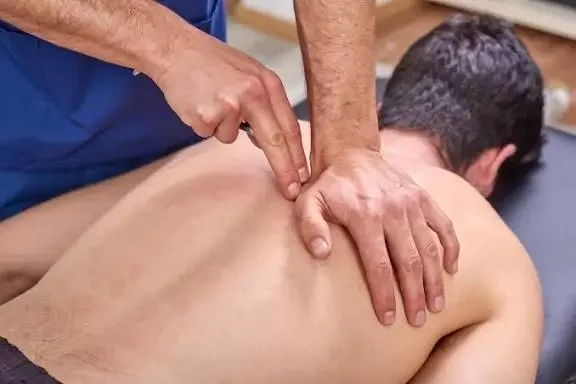
I go over my process step-by-step with everyone I see before we start. Here's what my spinal manipulation usually looks like:
Client lies stomach-down on the table.
I run my hands along the back to determine where the restriction is or where the pain lies.
I rest my hands directly over it.
I give it a brief thrust in a shallow and targeted direction.
It sometimes pops and other times it doesn't.
Once I move to the next spot.
The process often only takes a few minutes for the spine to be fully addressed. Most of the time, patients feel more relaxed right away. Some people may report feeling slightly sore after treatment, akin to having a good workout. That soreness passes quickly, though.
What is surprising for many patients is that they report a restful night's sleep or the absence of a headache by the following morning. This is because chiropractic care doesn't just affect the joint involved; it also provides feedback to the nervous system that changes how the brain interprets pain. Research published in the Journal of Manipulative and Physiological Therapeutics has found spinal manipulation can lower inflammatory markers in the body.
So, while a pop and a stretch may seem like the desired outcome, it's really a reset for the nervous system. Your body knows how to heal; it just needs the right input to activate those mechanisms. If you've been questioning whether chiropractic spinal manipulation can benefit your joint pain, learning more about what we do at Urbandale's Best Family Chiropractor may be a logical next step.
How Spinal Manipulation Works to Ease Joint Pain

Here's what happens during chiropractic spinal manipulation. Your chiropractor identifies a joint that's not moving like it should, either a joint that is stuck or has deviated from its usual position. It receives a swift, controlled force in a determined direction to restore motion that's been lost.
Chiropractic care at Levels Family Chiropractic
That crack or pop you may have seen or felt is due to the release of gas bubbles that occur in the joint fluid. It is not bone cracking or any breaking, but a pressure change in the joint capsule, not unlike opening a sealed container.
What Happens Inside the Joint
As a joint does not have a full range of motion, the tissue and muscles guarding the area become inflamed, nerve signals grow stronger, and the result is pain. Proper adjustments interrupt this cycle by restoring normal range of motion for that joint, decreasing the stress on nerves that trigger the pain response, stimulating the body's natural anti-inflammatory processes and relaxing the muscles that have been guarding the area.
Research shows, according to the Journal of Manipulative and Physiological Therapeutics, spinal manipulation changes inflammatory markers after one treatment. The body is capable of reacting rapidly once the joint begins moving again.
Why Joints Get Stuck in the First Place

The answer to this is obvious: a person works 40 hours a week at an office on or near Hickman Road, then drives home, sits on the couch or in a recliner and does it five days a week, over and over for three or four years until a person's mid-back can barely move. Your body will adapt to a lack of movement, and usually not in a positive way.
And no, this isn't just for people who sit all day. Kids carry heavy backpacks and start developing restrictions in their spines at a young age. Parents are lifting babies or toddlers all day long, and that causes a lot of stress to their lower backs. Teens get slammed into each other on the field at Urbandale High School; every collision puts stress on the joint, causing it to shift out of place.
Even stress alone is enough to cause your muscles to get locked up because you aren't even conscious of it sometimes. "I guess I'm just getting older" is a response I hear every day. This is rarely the truth. What's more often the case is a joint that hasn't been moving correctly for months or even years. Once you get it moving again, people get quite shocked at how much better they start feeling.
The Adjustment Is Only Part of the Equation

Most don't understand that when a chiropractor does a spinal manipulation, it's not just the joint that will change. It will also change how your nervous system processes pain.
The constant signals from a joint that is stuck will cause your nervous system to feel like you are in pain all the time, and that can impact many other things in your life such as sleep, mood, and energy.
Sometimes a push of a chiropractor's hand in the right spot will calm down those nerve signals to the point that the alarm clock is off. Muscles start to relax, and you are breathing a little easier. That may sound a bit hyperbolic, but I watch it happen in front of me every week.
If you're interested in seeing if the chiropractic approach is something that fits into your family's lifestyle, you should check out Levels Family Chiropractic to see what an initial consultation and assessment can look like.
The actual adjustment takes a matter of seconds, and the effects will reverberate for days after that. It is this why I say that a consistent plan of chiropractic is better than only one chiropractic appointment, because your body needs time to figure out how to maintain what is just set into place.
What a Chiropractic Adjustment Looks Like

Usually, when someone hears about a chiropractic adjustment, they picture something like someone going down on their back and cracking. What it is is more like a forceful push or controlled, quick movement that is done specifically to a certain joint. The end result is to restore the joint's normal motion. If you are wondering how that process happens, then read on. Here's how it happens:
An assessment happens first. When you walk into the office, your chiropractor is going to check a few things out before he does the actual adjustment. He'll check your posture, the range of motion you have, and where you might be experiencing pain or tightness. He'll also ask you a few questions about your stress levels, what your typical day looks like, and when the trouble first started for you.
The chiropractor looks for the restricted joint. By doing a lot of palpation, the chiropractor can feel the movement of a spinal segment in the neck, lower back or anywhere else. He'll do it until he finds one that isn't the way it should be when the joint is pressed on with his hands gently.
Positioning. The patient is going to get set up on the chiropractic table in a position that allows for the specific joint being adjusted to move without any other area getting involved.
The Thrust. This is a quick, precise application of force to the joint. It isn't about brute strength, but the depth and direction of the movement. You may hear the popping sound here, which is only gas being released from the fluids of the joint.
Re-evaluation. The chiropractor tests the joint again. Has it opened? Has it moved better? This indicates if the treatment has been achieved.
That popping can be the greatest concern for a first time patient. This question comes in at our Urbandale office every single week. The patient will tense up right before the thrust is about to take place because they are expecting pain. But the popping is completely normal and safe. Many adjustments do not create a popping sound either.
Most thrusts take only moments to complete, but what happens at the joint level is quite interesting.
Why the Joint Responds So Quickly
Once a joint stops moving properly, the muscles that surround it become stiff in an attempt to protect it. The nerves also become sensitive and send pain signals even when there isn't an acute injury. A quick, precise thrust can break this cycle by forcing the joint capsule to lengthen, resetting the nerves, and causing the surrounding muscles to relax.
It's the equivalent of trying to force open a door without the proper key. A battering ram may force a door open, but it takes just the right key and angle for this to happen easily. It's this same key and angle that we look for during an adjustment.
I work with many active parents in our Urbandale office with sore shoulders from lifting children all day, or painful lower backs from being seated all day at the office, or driving up and down Hwy 35. The joints that are having trouble can be stuck for many weeks, or possibly even years. But with one thrust, that joint can immediately begin to move as it was designed to move.

We will often walk first-time patients through every step and explain what will occur, even with adults. If we're adjusting you for mid back pain, I would explain to you how you would be positioned and what sensations you would experience during your adjustment.
This can be especially important with children who need a great deal of trust from the doctor before we begin any adjustments.
Apart from the thrust itself, there are other factors with chiropractic. In the hours and days after an adjustment, your body continues to heal.
There may be a reduction in inflammation, decreased nerve signaling, or enhanced blood flow in the region of treatment. You might view the adjustment as an entryway, and the healing process as an action that occurs inside this doorway.
If you're interested in learning more about how these types of adjustments play a part in a complete care plan for your family, see what family chiropractors in Urbandale have to offer by visiting our family chiropractic page here.
Frequently Asked Questions
How do I know if my joint pain is something chiropractic care can help?
You'll know chiropractic care may help if your joint pain comes with stiffness, reduced motion, or a feeling of being 'locked up.' This is common after long hours at a desk job, lifting kids, or sitting in traffic on Hickman Road. If rest and stretching haven't loosened things up after a few days, a restricted joint is likely the cause. Learning more about how chiropractic spinal manipulation works can help you understand if this fits your situation before you decide on next steps.
What should I expect at my first chiropractic visit for joint pain?
You can expect a hands-on check of your spine before any adjustment happens. Your chiropractor will feel along your back to find which joint is stuck or sore. Then you'll lie face down while a quick, targeted thrust is applied to that spot. The whole process usually takes just a few minutes. Most people feel looser right away, though some notice mild soreness for a day, similar to how muscles feel after light exercise.
Can kids and teens in Urbandale benefit from spinal manipulation too?
Yes, kids and teens can benefit, especially those carrying heavy backpacks to school or playing contact sports at Urbandale High School. Growing spines still develop joint restrictions from repeated stress, just like adult spines do. A gentle, age-appropriate adjustment can help restore motion before stiffness becomes a long-term habit. Parents often notice better posture and less complaining about sore backs after a few visits.
Does a louder popping sound during an adjustment mean it worked better?
No, a louder pop does not mean a better adjustment. This is one of the biggest misconceptions we hear from Urbandale families. The sound comes from gas releasing in the joint fluid, not from bones grinding or breaking. Some adjustments make no sound at all and still restore full motion to the joint. What matters is whether the joint moves better afterward, not how loud it was during the thrust.
Do desk jobs near Hickman Road cause more spinal joint problems for Urbandale workers?
Yes, long hours sitting at a desk, especially for workers commuting along Hickman Road, add steady stress to the joints in your mid-back and lower back. Sitting in one position for years teaches your spine to stay stiff, even when you're not at work. This buildup is why many adults assume stiffness is just part of getting older, when it's actually joints that have lost their normal range of motion.
How soon should joint pain improve after starting chiropractic adjustments?
Many people notice looser joints and less pain right after their first adjustment, though full relief often builds over several visits. Your nervous system needs repeated, consistent input to fully reset how it reads pain signals from a stuck joint. Some patients sleep better or wake up without a headache the very next day. If your pain isn't easing after a few sessions, it's worth discussing your progress with your chiropractor to adjust the treatment plan.