
Chiropractic Care for Knee Pain
Knee pain is not always caused by a problem in the knee itself, it may stem from misalignments or movement dysfunction in the hips, pelvis, lower back, or ankles. This article explains how chiropractors identify the root cause of knee pain through a whole-body evaluation, the conditions chiropractic care may help address, what to expect during your first visit, and how correcting underlying biomechanical issues can support lasting pain relief and improved mobility.
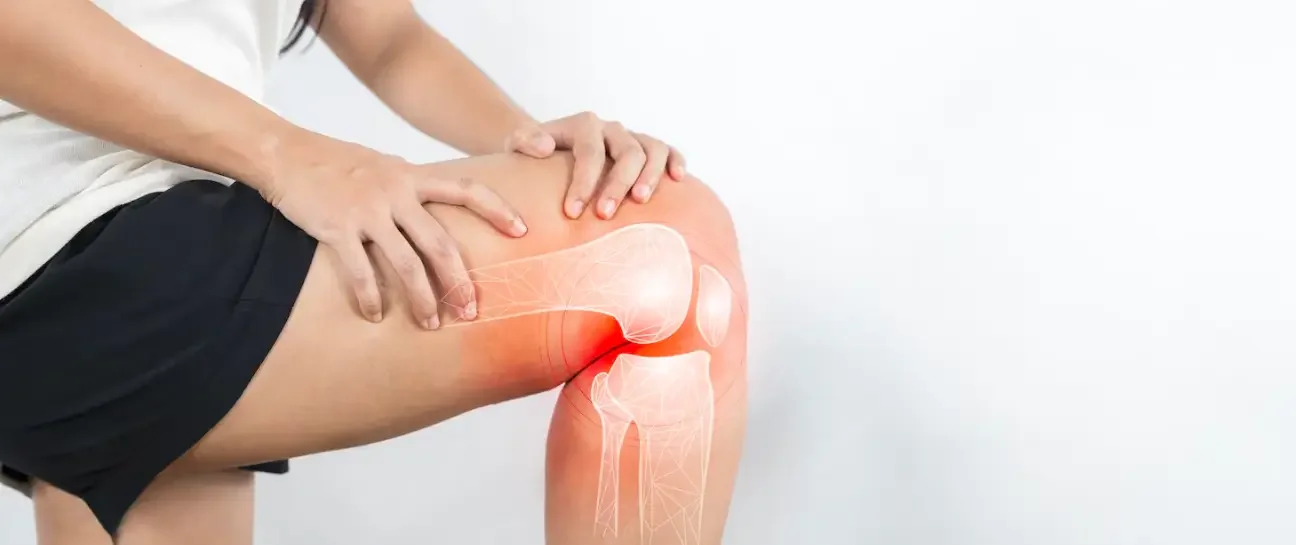
The Cause of Your Knee Pain Might Not Be Your Knee
Surprisingly, this is a common finding among patients who visit our office. They say their knee is painful, whether it hurts climbing stairs or even just walking long distances at Walker Johnston Park. Many times they feel the source of their issue is in the knee itself. However, in many cases the knee is simply a victim of misalignment elsewhere.
The whole body is interconnected. Your feet, knees, hips, and lower back are all connected by muscles, joints, and nerves. If a problem exists with any of the connections below the knee it could lead to issues in your knee joint. For example, if the hips aren't aligned correctly, your knee can take on extra stress because it's bearing the weight that should be supported by the hip.
Our Urbandale chiropractic office commonly finds that pain in the knee is caused by a restricted hip joint or misaligned pelvic bones.
Other Places Knee Pain Can Come From
Other areas that are often associated with knee pain include:
The hip joint, if the hip joint has reduced motion or isn't aligned correctly it can cause your knee to move abnormally.
Problems with your lower back and pelvis, if these aren't aligned your body can be placing added weight on certain areas of your legs as you walk.
The ankle and foot, ankle injuries, flat feet, or foot pain can cause gait abnormalities that lead to knee pain.
The IT band and other muscles around your knee, tight muscles can pull on the knee causing abnormal tracking of the kneecap.
This is why sometimes wrapping or bracing your knee isn't enough to help you recover from pain. Even though you're reducing pain in your knee the real issue that caused the knee pain is still present. That's why the pain continues to bother you despite your efforts.
The Value of a Chiropractor's Whole Body Approach
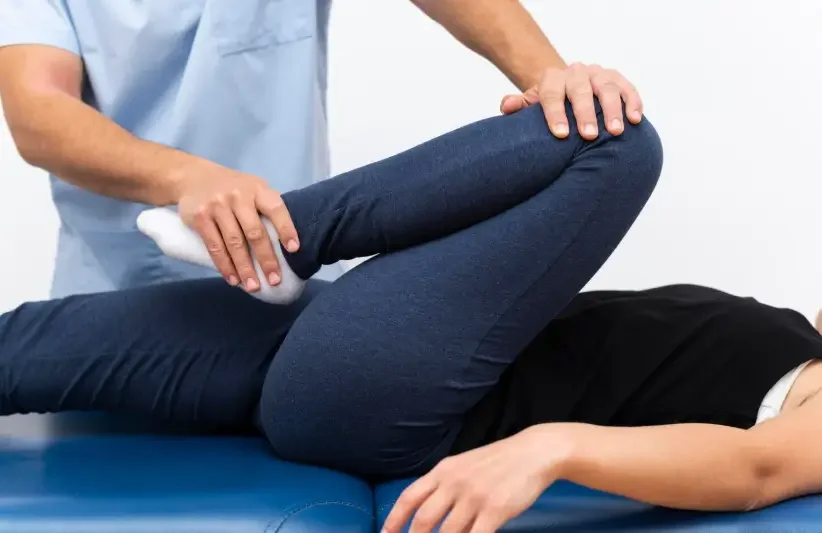
That's what makes an effective chiropractor so different. A chiropractor looks at more than just the joint that has pain.
A chiropractor assesses how you move and looks at your posture. He or she checks your hip mobility, your ankle motion, and your spinal alignment.
One of my patients has been suffering from persistent knee pain for about four months. She participates in a local volleyball league. I determined that the cause of her knee pain was that her back was misaligned and affecting how she stepped on that leg while playing. It took only a few tweaks to her spine and pelvis, and then her knee felt better, without us ever treating the knee itself.
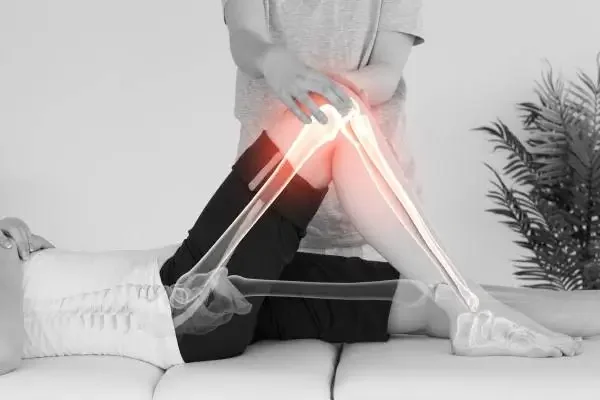
It's a common experience. The Journal of Chiropractic Medicine reports that lower extremity pain is commonly the result of biomechanical imbalances in the spine and pelvis. What most people fail to recognize is that if they delay getting treatment, they're making things more difficult for themselves by giving a compensation pattern more time to run its course, which means your body gets better at moving the wrong way.
It's exactly the reason that it's important to know where knee pain really originates because if you've suffered knee pain for a while, the root of your problem could very well be in your hip or your back, and a full evaluation would be necessary to determine where it lies. You can read more about how we handle these types of injuries on our Sports Injury Recovery and Performance page.
Common Knee Pain Conditions That a Chiropractor Can Evaluate
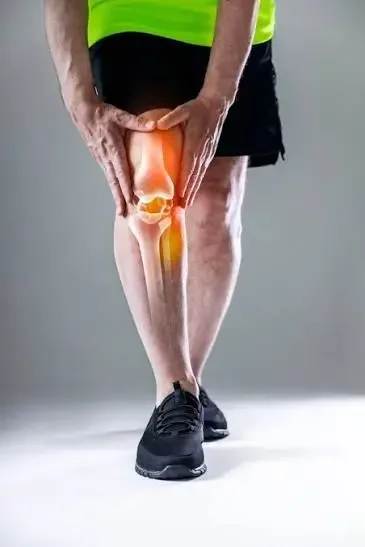
Too many people think knee pain begins in the knee. This is not always the case. In fact, this is a misdiagnosis we see frequently in our practice. The culprit might not be the knee at all; in some cases, it is your hip, your ankle, or your back.
A chiropractor evaluates the entire patient, not just the area of pain, in the sports injury recovery team in Urbandale. Your knee is in between your hip and your ankle.
For it to perform the way it should, both of the major joints have to move correctly as a unit. When either of these two joints is stiff or misaligned, your knee has to overcompensate, and over time it begins to fall apart. Sports Injury Recovery Team in Urbandale
Muscle and Joint Imbalances
A muscle that's too tight on one side of your leg can cause your patella (kneecap) to be pulled out of alignment; weak glute muscles can cause your knee to collapse inward each time you walk or run. These imbalances take time to develop, so for many months you may not be experiencing any problems.
And then, on one particular day, you're walking through Walker Johnston Park, and suddenly your knee gives way. But this didn't happen suddenly, and you didn't just injure yourself that morning; it happened because you've been slowly over time moving improperly for weeks or even months.
Some of the most common causes we see here include:
A hip or pelvic misalignment that increases stress on your knee
The lack of mobility in your ankles due to previous ankle sprains or stiffness
Overactive and tight IT band that pulls your patella laterally
Subpar postural habits that alter your loading patterns
Muscle imbalance between your quadriceps and hamstring muscles
These all can contribute to knee pain, even though they all originate elsewhere. That's the whole point to remember.
Sports and Activity-Related Causes
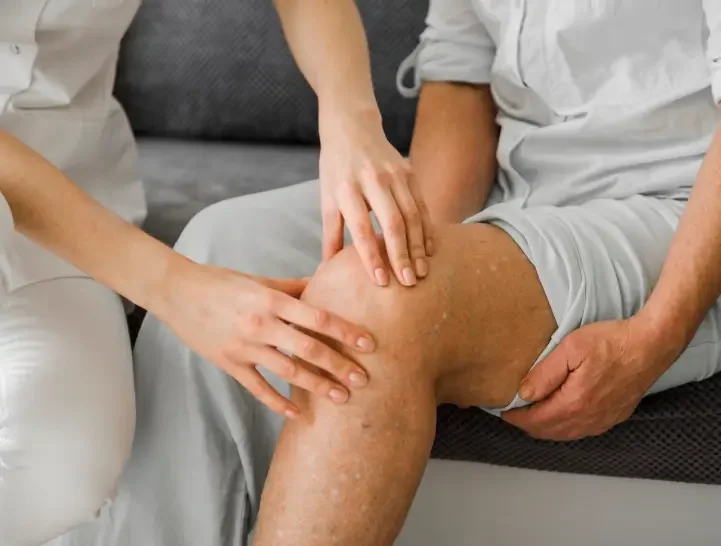
Urbandale is home to many active families. Children enjoy playing soccer and basketball all year round. Adults like to run their trails and hit the gym before starting their work day. That activity is great for the body. But repetitive stress can take a toll quickly.
One we commonly diagnose and treat is runner's knee. It occurs when the knee cap isn't moving correctly. Pain typically lies behind the knee cap or around the kneecap. It becomes more uncomfortable going down stairs or when sitting for long periods of time. A chiropractor can assess your gait, your feet's position, and your hip's positioning to locate the cause of your knee pain.
Children in sports have a different set of problems. Growing causes changes in their movement, in a way. A joint that may have felt fine six months ago is now suddenly feeling tight and painful. We have seen young athletes who were certain that they had torn something when they had a misalignment in the pelvis that was affecting the movement in their legs. If you are concerned about your kid's knee injuries in sports, our sports injury recovery in Urbandale can help sort it out.
Wear and Tear of Everyday
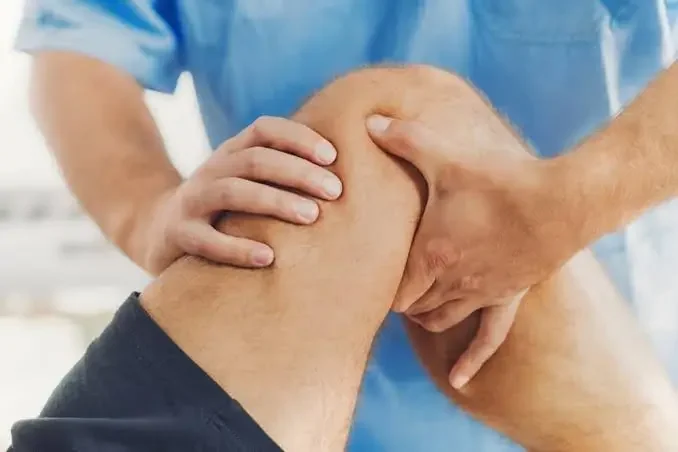
It doesn't always have to be a sport or athletics. Sometimes it's due to sitting in a chair at work all day. Your hip flexors can become tight. Your glutes can become inactive. Your knees can become overloaded by forces they're not designed to absorb.
One thing many people don't think about is stress. It can be another culprit. When your nervous system gets overworked, your muscles get tense. That tension affects the movement in your joints. Sometimes I have seen knee pain come out of a very tense lower back and hips. Sometimes there isn't any type of injury.
So don't write off your knee pain as being "just getting old." There is often a mechanical cause. And a chiropractor is trained to find it.
What Happens When I See Chiropractor for My Knee Pain?
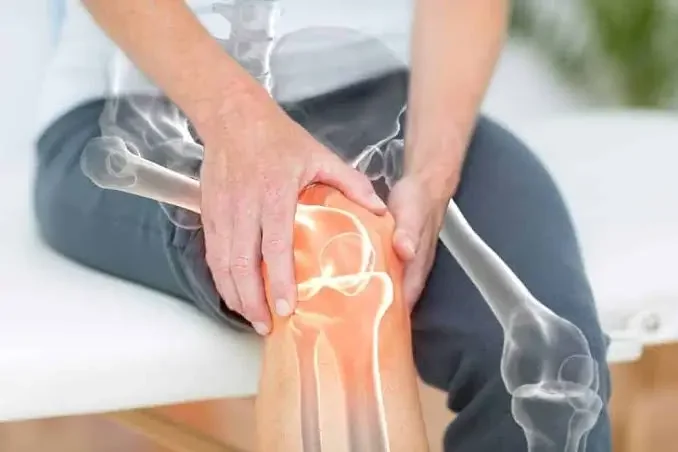
Many people are a little nervous when they walk through the door. They try icing. They may rest the knee, or get a knee brace from the store. Nothing worked. So, what happens when you meet with a chiropractor for your knee pain? It is less than you may think, we just take it one step at a time.
First Visit: More Talk Than Adjustments
Your initial visit is going to be a conversation. And, it's probably not going to be a quick conversation. We need to know when your knee pain started, what makes it worse, and how it has changed how you live your life. Can you take the stairs at work? Are you still able to walk down at Walker Johnston Park in the weekend? These details are more important than you may think.
When you finish the talk, here's what to expect during a typical first visit:
An integrated foot-to-hips-to-spine evaluation. We rarely see isolated knee issues that aren't influenced by what's happening further up the chain.
Range-of-motion assessments to see how your knee is currently moving relative to what we'd expect for your specific age and activity level.
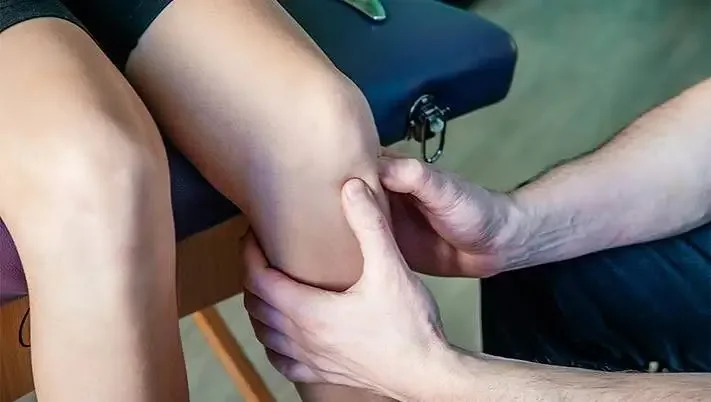
A detailed manual examination of the knee itself, along with the surrounding hip and lower back structures.
A gait analysis. I'm looking to see if there's any obvious, or sometimes even subtle, limping or shifting that you don't even realize you're doing.
A thorough walkthrough of our findings. I explain my findings and what that might indicate before moving on to anything else.
I describe every step of the process to you, as an adult or teen athlete patient at my clinic. I want you to know exactly what I'm about to do and why before I adjust you.
The Adjustments: What To Expect
If we decide to move forward with care that same day, the adjustments I make for the purpose of relieving knee pain will be gentle. People often think of chiropractic adjustments as the loud, cracking adjustments with significant pressure.
But for relieving knee pain, it's not what's needed. I'll focus on the knee joint with targeted low-force techniques.
I might also address your hip and lower back. Sometimes the "knee" pain that I'm addressing really isn't in the knee, and is due to compensatory positioning that's originated elsewhere, and I'll treat that instead.
It's often a surprise for people when we first start addressing a knee issue that the root cause of it is, for example, their pelvis is not where it should be for them. It's common for people who do a lot of running, and for moms and dads who spend a lot of years carrying kids on one side of the hip, to have that happen.
After the adjustment, you may or may not feel relief right away. Both are perfectly normal. We need to wait to see how the body will react to the changes in alignment.
Putting Together Your Plan
If it appears that your knee issues are amenable to chiropractic care, I'll discuss a plan with you. It won't be a year-long or lifetime commitment. We'll just look for what your body has indicated is going on for the purposes of your knee pain, and develop a plan from there that includes follow-up chiropractic care, exercises you can perform at home, and possibly near-infrared light therapy for the purpose of reducing pain.
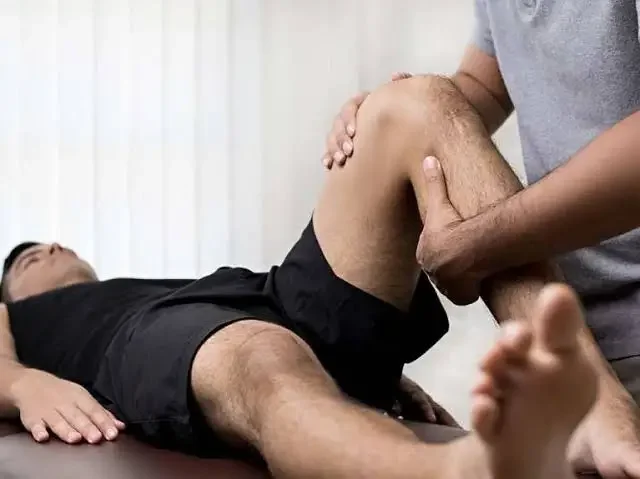
I take great pride in explaining what's going on with your knee to you. A well-informed patient is the patient who follows their plan. If that means I need to spend more time on education to teach them what a knee is and what they're dealing with versus just adjusting their knee, then I'm willing to do that. That education piece matters a lot to me.
So if you've been delaying addressing your knee with us, please know that the visit starts with a conversation and exam. No surprises. If you're interested to learn more about chiropractic care and recovery from a sports injury, or an "old" one, see our sports injury recovery page to understand exactly what we can do for you and others who have come in with that issue to our clinic in Urbandale.
The hardest part is making that first appointment. After that, it gets much easier.
Frequently Asked Questions
How can a chiropractor help with knee pain if the problem is in my hip or back?
A chiropractor helps by finding and fixing the misalignment that is putting stress on your knee. Your hips, back, and knees all work together as one moving system. If your pelvis or spine is out of place, your knee often takes on extra pressure to make up for it. Adjustments to these areas can restore normal movement and take the load off your knee. Many Urbandale patients feel relief without ever having their knee directly treated.
How do I know if my knee pain is serious enough to see a chiropractor?
You should get checked if knee pain lasts more than a few weeks or keeps coming back after rest. Pain that changes how you walk, climb stairs, or play sports at Walker Johnston Park is a sign something deeper is going on. Waiting too long can let bad movement patterns set in, making recovery harder. Early evaluation helps find the true cause before it turns into a bigger problem.
Does being active in Urbandale make knee pain more likely?
Yes, staying active can raise your risk if small movement problems go untreated. Urbandale has many runners, soccer players, and gym-goers, and repeated motion can wear down a knee that is already compensating for a hip or ankle issue. Regular movement checks catch these patterns early. Our sports injury recovery team in Urbandale works with active people to keep small issues from becoming lasting pain.
What is the difference between runner's knee and knee pain caused by hip misalignment?
Runner's knee usually causes pain right around or behind the kneecap, especially on stairs or after sitting a long time. Hip-related knee pain can feel similar but often comes with stiffness or uneven movement on one side. Both problems can look alike from the outside. A proper gait and joint check can tell them apart. This is why our office looks at your whole body, not just the sore spot.
Can wearing a knee brace fix the real cause of my knee pain?
A knee brace can lower pain for a while, but it does not fix what is causing the pain. If a hip or ankle issue is behind your symptoms, the brace only hides the discomfort. Once you stop wearing it, the pain often returns. That is why we check your hips, ankles, and spine to find the actual source instead of just covering it up.
Why does my knee pain keep coming back even after it feels better?
Knee pain often returns because the root cause, like a tight IT band or hip restriction, was never corrected. Temporary relief can happen through rest or bracing, but the underlying movement problem stays. Over time, your body relearns the same faulty pattern. A full evaluation of your hips, ankles, and spine helps break this cycle for good.